
Bank content audit:
200+ service drafts, checked line by line.
HDFC Bank asked us to assess and improve its client communication. We built an audit framework, checked 200+ letters and emails against it, and rewrote them in plain language.

Letters written by many departments, in many voices.
HDFC Bank wanted to know how well its customer communication worked. It sent us 200+ drafts from different departments: welcome emails for new account opening, locker rent letters, credit card payment reminders, Term Deposit Renewal letters and emails about loan sanctions.
Each department wrote in its own way. Jargon and complex terminology made everyday communication harder to follow. The bank also had to stay compliant with the statutory communications the law requires.
The bank asked for four things:
- what its customers expect from service communication
- a framework to evaluate the drafts
- a score for every draft against that framework
- a report on the critical gaps and what to improve next
An audit framework,
built for the bank.
Three levels, six checks in each. A draft had to pass the basics before anything else counted.
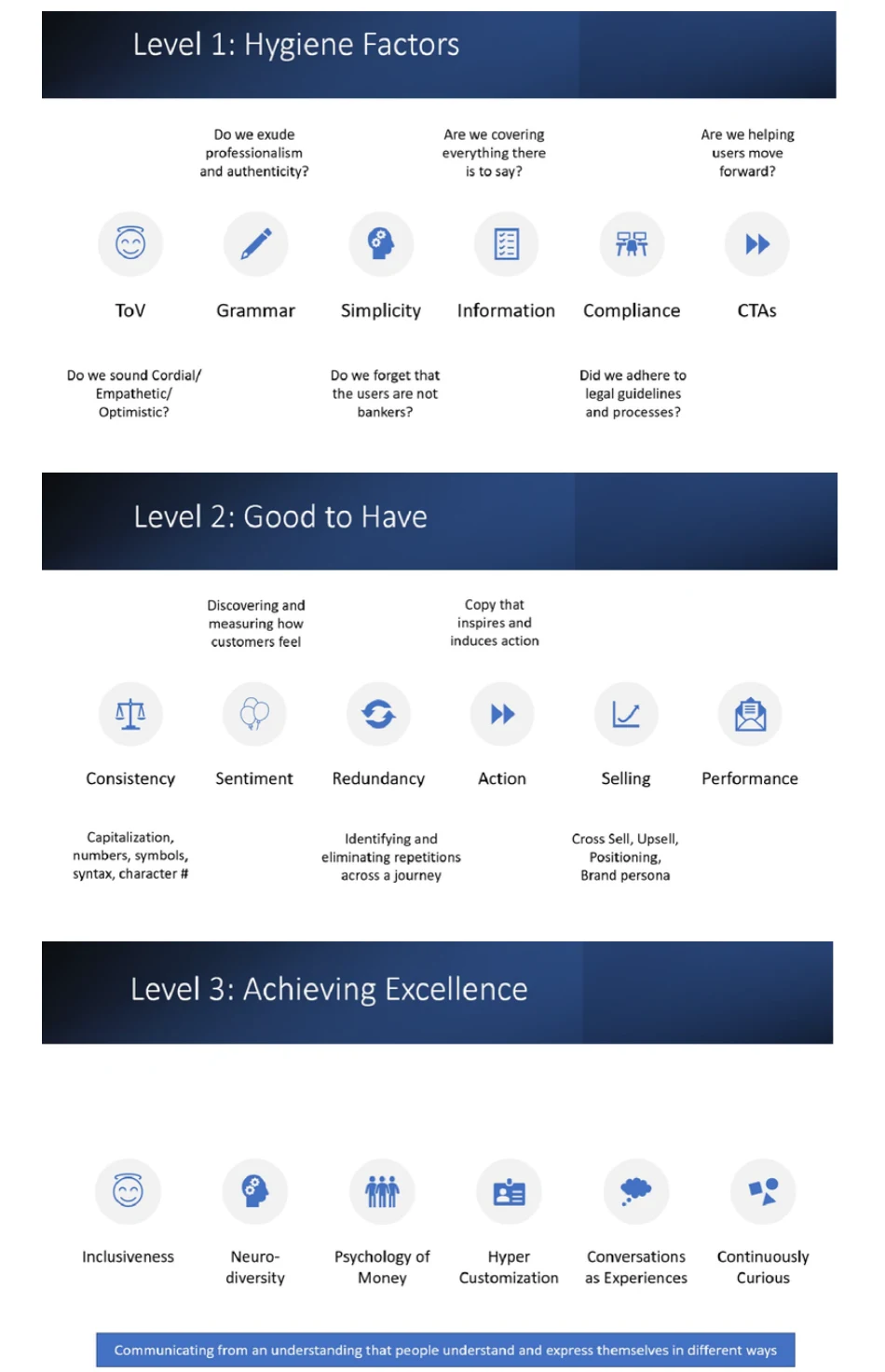
The framework, as published in our case study.
- Level 1: Hygiene factorsTone of voice, grammar, simplicity, information, compliance and calls to action. One of its questions: do we forget that the users are not bankers?
- Level 2: Good to haveConsistency, sentiment, redundancy across a customer journey, action, selling and performance.
- Level 3: Achieving excellenceInclusiveness, neurodiversity, the psychology of money, hyper-customisation, conversations as experiences and staying continuously curious.
The job in numbers.
Paced by the bank. Three layers on every draft.
- Set the paceThe bank's business heads reviewed sample drafts and the time one took to audit and edit, then set the timeline for each batch.
- AuditEvery draft was scored on the audit form: tone and grammar first, then the Flesch Reading Ease score, redundancy and sentiment.
- EditAn editor rewrote the draft for readability, reading ease and grammar.
- ReviewThe Project Head reviewed every draft. Sentiment was scored before and after, and each draft was tagged negative, neutral or positive.
After delivery, we took in each department's feedback and made small changes for the latest guidelines and regulations.
What the work needed
- Evaluating diverse communications across departmentsDrafts came from different departments, on accounts, lockers, cards, deposits and loans.
- Maintaining brand voice consistencyOne voice across every channel, in line with the bank's branding guidelines.
- Using financial services expertiseA dedicated team of writers, editors and a subject matter expert, who knew financial terms and how to explain them.
- Collaborating closely with bank personnelDoubts were cleared with the bank's teams as the batches moved.
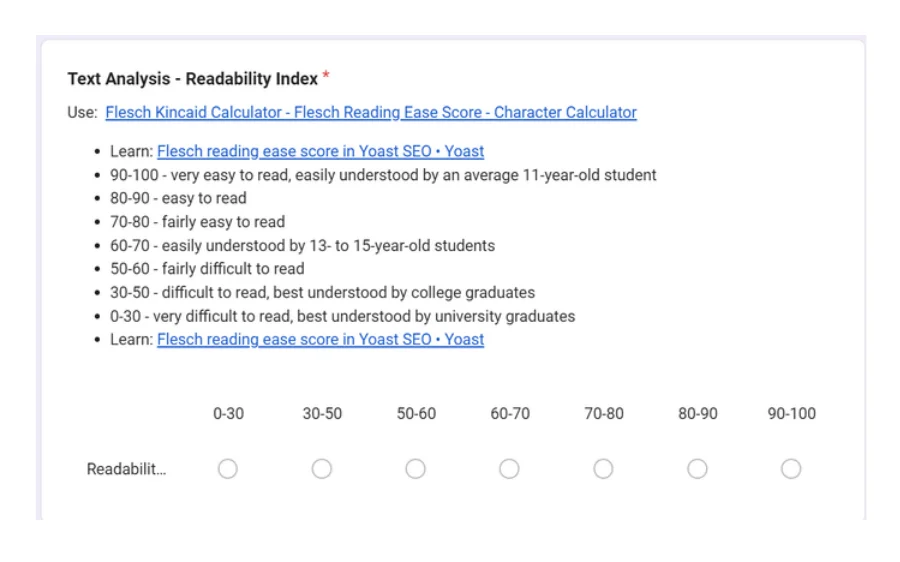
One line of the audit form: every draft was placed in a Flesch Reading Ease band, from 0-30 (very difficult) to 90-100 (very easy).
The bank decided what went live.
Through this process, we audited 200+ service communication drafts drawn from different departments of the bank. We identified where language intricacies, jargon and complex terminology were making everyday communication harder to follow.
The bank received each edited draft, sorted by tone before and after, and a report on the framework, the gaps and what to improve next.
The decision to deploy sat with the bank: its Quality Control teams ran their own analysis of each document before any revised draft went live.
Plain language is not only for first-time customers. Nielsen Norman Group found that experts prefer it too.
Questions about this audit.
What did the HDFC Bank content audit cover?
200+ service communication drafts from different departments of the bank: welcome emails for new account opening, locker rent letters, credit card payment reminders, Term Deposit Renewal letters and emails about loan sanctions.
What was each draft checked for?
A framework built for the bank, in three levels of six checks. The basics: tone of voice, grammar, simplicity, information, compliance and calls to action. Then consistency, sentiment, redundancy, action, selling and performance. Then inclusiveness, neurodiversity, the psychology of money and more. The audit form also placed every draft in a Flesch Reading Ease band.
Did you only report on the drafts, or rewrite them too?
Both. Each draft was audited, then edited for readability, reading ease and grammar, then reviewed by the Project Head. The bank received the edited drafts, sorted by tone before and after, plus a report on the framework, the gaps and what to improve next.
Who decided which rewritten drafts went live?
The bank. Its Quality Control teams ran their own analysis of each document before any revised draft went live.
Can you audit our letters, emails and SMS the same way?
Yes. We build the parameter set around your products, your regulator's rules and your brand voice, then audit and rewrite a first batch. Start with a content audit or a paid pilot.
Related services.
More case studies
Start small. Then scale.
Send us a few of your letters or SMS templates. We will show you what an audit and a plain-language rewrite look like on your own content.