
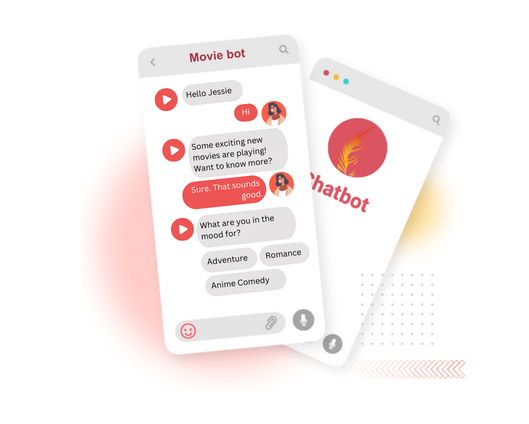

Picture this: a customer urgently needs help with a product or service. They call your support line or open a chat, only to face confusing menus, generic responses, and a lack of clarity. Instead of feeling supported, they feel ignored, like just another number in the queue.
Moments like these can damage more than just the customer’s day; they can harm your business. Frustrated users are likely to abandon the interaction altogether or, worse, vent their disappointment online. The lack of personalization or empathy in automated systems often reinforces the belief that businesses care more about efficiency than about truly helping their customers.
Whether it's resolving issues promptly, guiding users seamlessly, or even infusing a bit of personality, the right chatbot script writing practices can leave customers feeling heard and valued. Let’s dive into how you can create conversational content that elevates your customer service experience.
Understanding the role of conversational content is essential for creating impactful user interactions. At its core, conversational content acts as the bridge between automation and empathy. In chatbot script writing, it is the key element that shapes customer interactions, ensuring that automated responses feel natural and engaging. Well-designed chatbot scripts can influence user satisfaction and directly impact brand perception. When users feel understood and supported, they are more likely to have a positive view of your brand.
On the other hand, poorly written chatbot scripts can lead to frustration and confusion, damaging customer trust and loyalty. The tone, language, and flow of the conversation play a crucial role in creating a seamless experience. Chatbot script writing requires an understanding of the user’s intent, the ability to predict and respond effectively, and the flexibility to adjust based on context.
Good conversational content goes beyond simply providing answers, it creates a human-like interaction that resonates with the user, even in automated exchanges. When crafted thoughtfully, chatbot scripts can turn routine transactions into memorable experiences, making users feel valued and increasing the likelihood of returning interactions, thus strengthening both customer relationships and brand reputation.
Crafting effective conversational content for chatbots and IVR systems is critical for improving customer experiences and building lasting connections. Here’s why chatbot script writing matters:
The first step in crafting effective scripts is understanding who you’re speaking to. Are your users young, tech-savvy individuals, or older adults less familiar with technology? Knowing your audience helps shape tone, vocabulary, and overall messaging.
Avoid complex jargon or lengthy sentences. Clear and concise language ensures accessibility for a diverse audience.

Empathy is a cornerstone of customer service, even in automated interactions. Scripts should acknowledge customer emotions and provide reassurance.
Predict what users may need and provide options that address common concerns. Offering proactive solutions enhances user satisfaction.
Make interactions feel tailored by using customer names or referring to specific details where possible.
Ensure users know what to do or expect after the interaction ends. This reduces confusion and improves the overall experience.
Frame responses positively to create a more encouraging experience. Replace negative phrasing with solutions-oriented wording.
Ensure scripts are adaptable for use across chatbots, IVR systems, and live agents. Consistency in tone and messaging is crucial.
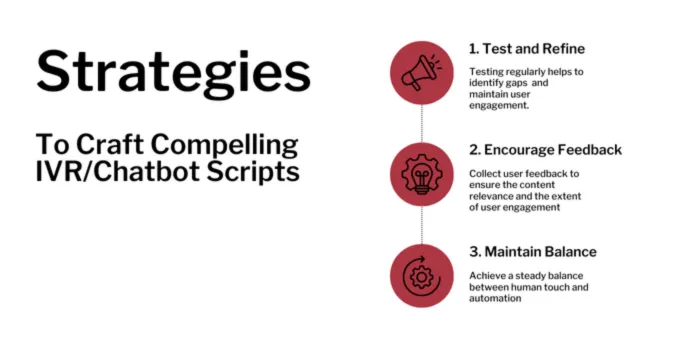
Continuously test scripts with real users to identify gaps or areas of improvement. Feedback-driven refinement ensures relevance and effectiveness.

In advanced chatbot script writing, personalization plays a crucial role. By integrating CRM systems, chatbot scripts can address users by name, recall past interactions, and offer tailored solutions. This personalization enhances user satisfaction and engagement, leading to quicker resolutions and a smoother, more interactive experience.
To cater to a global audience, chatbot scripts should include multilingual capabilities. By offering language-switching options based on user preferences or location, advanced chatbot script writing ensures that users can communicate effectively in their preferred language. This reduces misunderstandings and fosters a more inclusive customer experience.
Incorporating Natural Language Processing (NLP) into chatbot scripts allows users to interact naturally, bypassing rigid menu structures. NLP-enhanced chatbot script writing enables the bot to understand context, process variations in phrasing, and provide more intuitive responses, making the conversation flow smoothly and efficiently for the user.
Chatbot script writing with intent recognition can dynamically route users to the appropriate department or solution. By analyzing user queries through advanced NLP and AI algorithms, chatbot scripts optimize response times and reduce unnecessary escalations, ensuring that users are directed to the right help quickly and accurately.
A multi-stage chatbot script allows for more complex interactions, where users can complete tasks over several steps. This approach is ideal for processes like account verification or multi-query handling. Well-designed multi-stage chatbot scripts can break down complex tasks into manageable steps, improving the user experience by guiding them seamlessly through each stage.
Contextual awareness is a key component of advanced chatbot script writing. By remembering previous user interactions, chatbot scripts can offer continuity in conversations. This prevents users from repeating information and enhances the overall user experience by providing responses based on historical context, reducing friction in the interaction process.
Proactive chatbot script writing goes beyond reactive interactions by anticipating user needs. By triggering helpful suggestions or alerts at relevant moments, these scripts engage users before they need to ask. Proactive chatbot scripts improve user experience, foster customer engagement, and reduce the need for customers to initiate every interaction.
Effective chatbot scripts should handle escalations smoothly when a query exceeds the bot’s capabilities. With well-crafted escalation paths, chatbot scripts can seamlessly hand off conversations to human agents, ensuring that the user experience remains uninterrupted. Clear and efficient escalation management within chatbot script writing ensures that users receive appropriate assistance in a timely manner.
To ensure customer satisfaction, both chatbot scripts and IVR systems should be designed to minimize wait times. By providing quick responses and reducing processing delays, these systems improve user experiences. Fast, efficient interactions allow customers to resolve their queries swiftly, leading to higher engagement and satisfaction.
Ensure that the tone and style of chatbot scripts and IVR systems are consistent across all channels. Whether users engage via phone, chat, or other mediums, maintaining consistency in messaging and interaction style builds trust and makes the experience feel coherent, regardless of platform.
Offer flexibility in how users interact with both chatbots and IVR systems. Allowing users to choose between voice input, keypad, or text-based responses ensures accessibility. This accommodates various user preferences and helps reduce abandonment, ensuring that both chatbot scripts and IVR systems are inclusive.
Implement intelligent algorithms in chatbot scripts and IVR systems to detect the context of a call or interaction. By analyzing keywords, tone, or intent, these systems can make more accurate decisions in routing calls or providing responses, leading to faster issue resolution and fewer misrouted calls.
Minimize the cognitive load for users by breaking down information into digestible chunks. Both IVR and chatbot script writing should avoid overwhelming users with too many options or lengthy responses. Instead, prioritize essential information and guide users step-by-step to enhance their experience and prevent frustration.
Instead of waiting for the user to ask questions, chatbots and IVR systems should proactively provide helpful information. By anticipating user needs (e.g., offering additional options or reminders), these systems can improve efficiency and user satisfaction by offering support before it’s explicitly requested.
Both chatbots and IVR systems must prioritize user data security and privacy. This includes implementing secure authentication protocols, handling sensitive information with care, and complying with relevant regulations (like GDPR). Clear communication regarding data usage within chatbot scripts and IVR builds trust with users and ensures compliance.
LexiConnstands out as a top choice for chatbot script writing due to our expertise in creating engaging, intuitive, and efficient chatbot scripts that enhance user experiences. The team at LexiConn combines cutting-edge technology with a deep understanding of user behavior to craft scripts that align with your business goals and customer needs.
Chatbots and IVR systems have become vital in delivering exceptional customer service. However, their success depends on the quality of their conversational content. By focusing on empathy, clarity, and personalization, businesses can transform automated interactions into meaningful customer experiences.
Contact LexiConn for a free 30-minute consultation or book a free consultation.

I have read and accept the Privacy Policy
Read More