
AI training data and annotation services,
checked like an answer key.
Models learn from labeled pairs: the input, and the human-verified truth it gets graded against. Producing that truth at quality, at scale, in more than one language, is where most pipelines break. We supply the human layer.
Editorial QA and data discipline trusted by regulated enterprises since 2009






What we deliver.
Human data your model can learn from, written or checked by trained people.

Human-written text datasets
Conversational data, instruction-style content and domain writing for LLM training. Written by trained writers, not scraped, not synthetic.
FAQ and Q&A writing ›
Handwritten and multilingual datasets
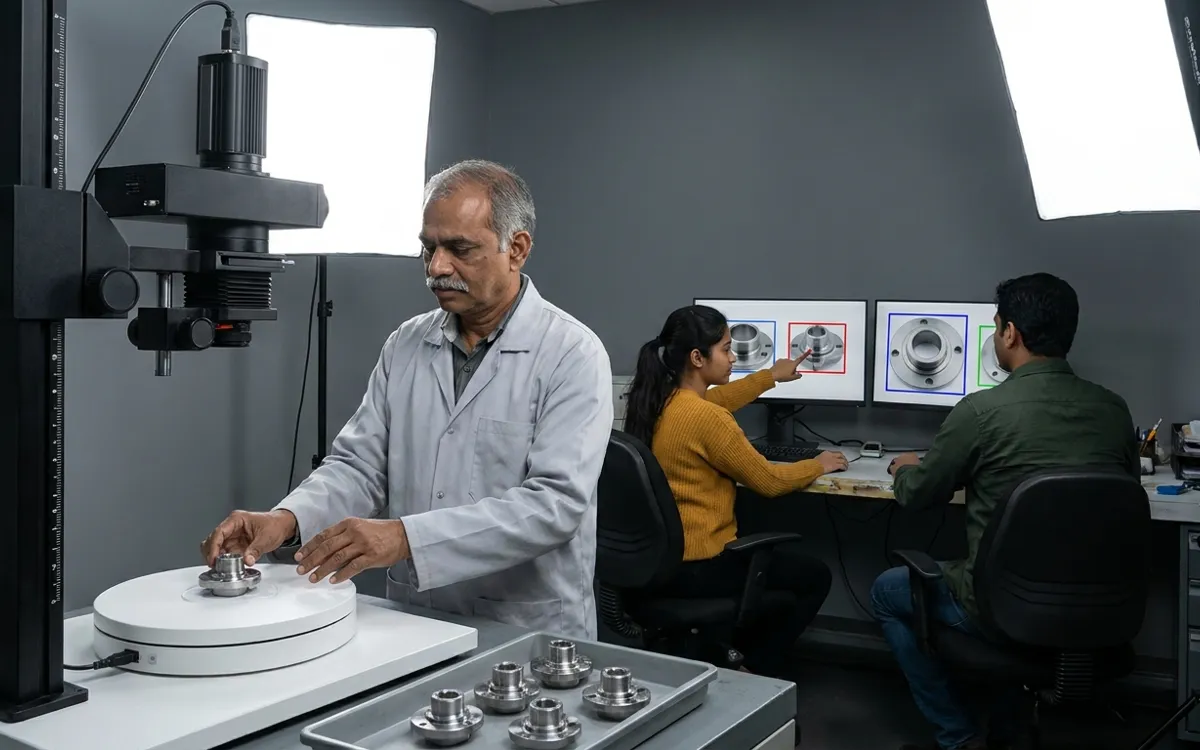
Handwriting image sets in English and Indian languages, paired with verified transcription and translation, delivered as machine-ingestible manifests.
Data labeling services ›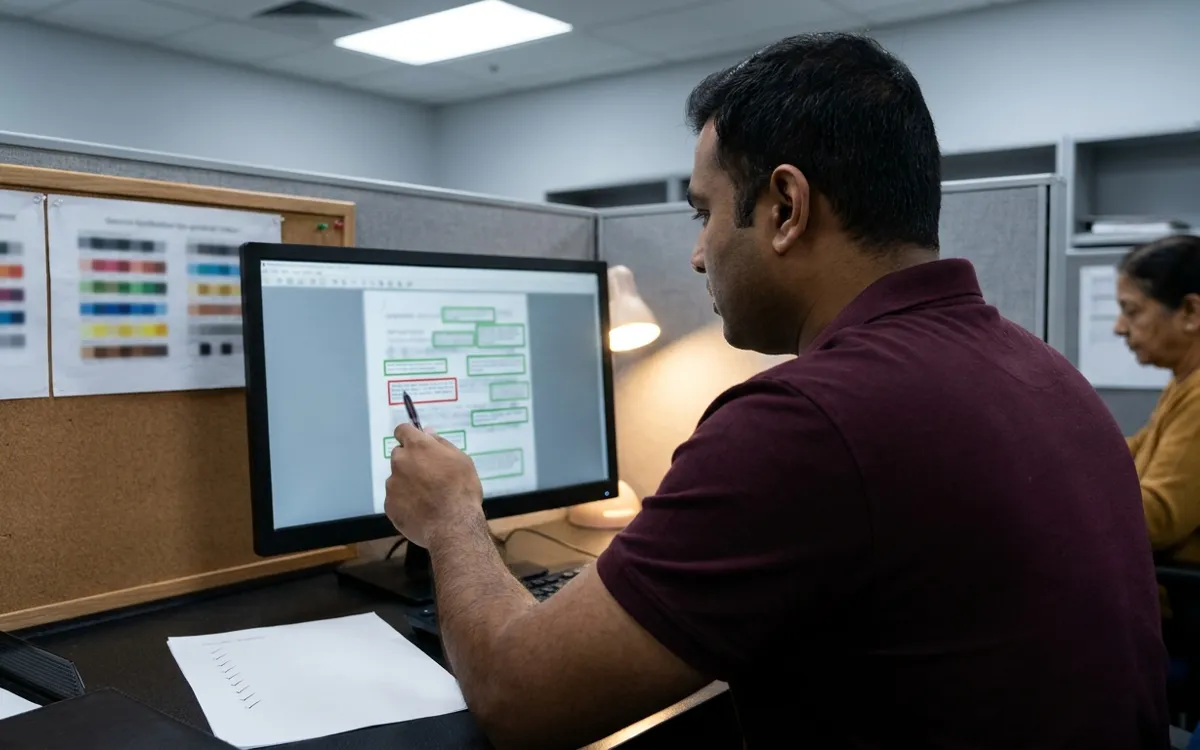
Verification, data labeling, and QA layers
Human-in-the-loop review of extractions, labels, annotations and model outputs. Every record is read by a person before it ships.
Video metadata and tagging ›Structured data we have written
and checked at scale.
Metadata, question banks and fact sheets, built to a spec and checked batch by batch.


A wrong answer key looks right
until the model learns it.
These errors pass a quick glance. A trained reviewer catches them.
Marathi version: “like metals”
The English said “UNLIKE metals”. One word reversed the fact.
Q: Which law governs income tax in India? A: the Income-tax Act, 1961.
Right when written. Since 1 April 2026 it is the Income-tax Act, 2025.
“The claim was paid after three reminders.” Sentiment: neutral
Neutral or negative? If the guideline is silent, two annotators will disagree.
The first is from our own language review of a textbook translation, shortened. The other two are illustrative.
“Data cascades are pervasive (92% prevalence), invisible, delayed, but often avoidable.”Sambasivan et al., “Everyone wants to do the model work, not the data work”, Google Research, CHI 2021. Based on interviews with 53 AI practitioners in India, East and West Africa and the USA.
Selling into Europe? Article 10 of the EU AI Act (Regulation (EU) 2024/1689) asks that training, validation and testing data for high-risk systems be “relevant, sufficiently representative, and to the best extent possible, free of errors and complete”.
Why an editorial company
for training data.
We have run editorial QA on regulated BFSI content since 2009. Applying that discipline to ground-truth data is not a pivot.
One record per item, to your spec
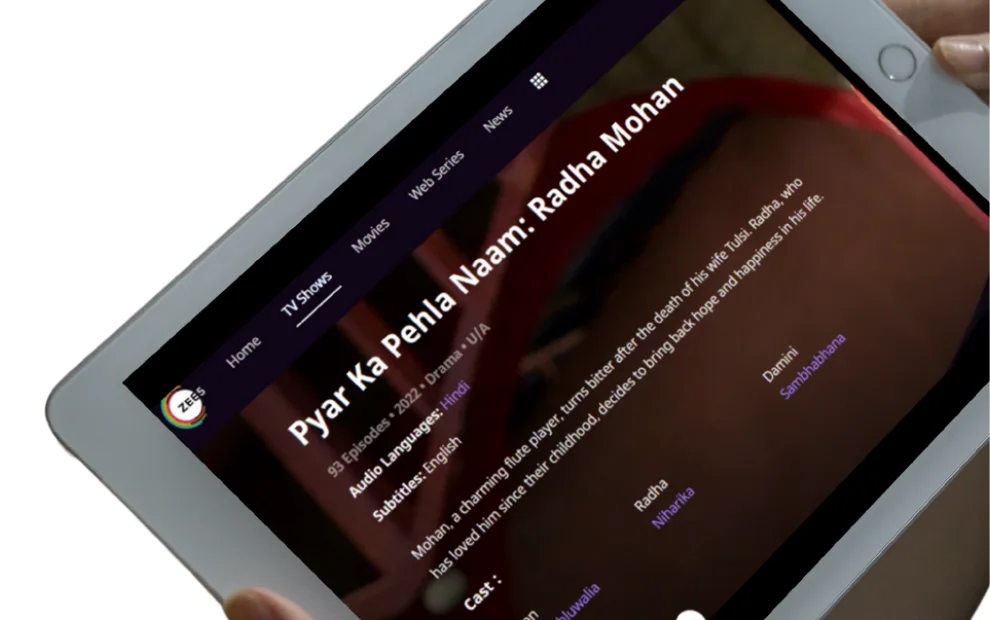
For Zee5 we filled each episode’s fields to the client’s CMS specification, and watched every episode before writing about it.
Episode metadata for Zee5Two checks on every batch
One person labels, a second reviews, and a QC pass runs on each batch before it reaches you. Work starts with a pilot so the guideline is tested first.
The two-stage QC we built for Zee5A glossary before any translation
We wrote and designed IDFC FIRST Bank’s textbooks for Classes 6 to 10 in English, then translated them into Hindi and Marathi. Every term was fixed first, then every page reviewed.
Language review for IDFC FIRST BankHow a dataset moves through our team.
- Write the guidelineWhat each label means, the edge cases and what to flag. For M56 Studios we wrote region-specific guides and checklists, and the rules every outside contributor worked to.
- Run a pilot batchA small batch shows where the guideline is unclear before the volume starts.
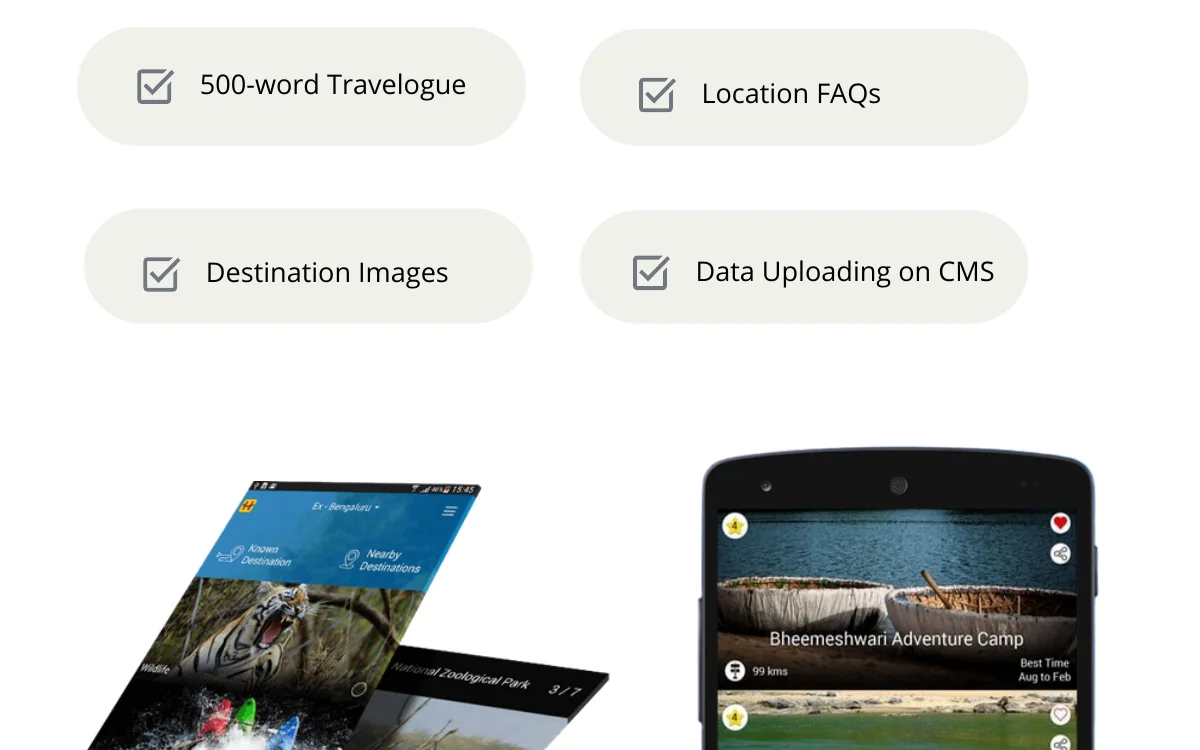
- Check against the sourceEvery fact traced to where it came from. For BPCL each destination fact was cross-referenced against several reliable sources before upload.
- Review in batchesTwo-stage QC on each batch, with style, tone and word usage settled early and held for the whole job.
- Deliver in your formatStructured, machine-ingestible manifests, or loaded straight into your CMS, as a dedicated back-end specialist did for BPCL.
Who buys this.
Data annotation platforms, AI labs and ML teams that need English and Indian-language human data, checked by a person before it ships.
Banks, insurers and B2B companies too. About 45% of our clients are in financial services, and the data their chatbots and assistants answer from has to be right: the 14,000 product FAQs we wrote for a private bank’s chatbot are one example.
See how we work.
What does your model need?
Pick the kind of data to see the services behind it.
Labels and metadata. Structured fields and tags, written to a spec and checked in batches.
Checked facts and Q&A. Question-and-answer data and facts that have to be right.
Banks and insurers. Ongoing content for regulated companies, where a wrong figure costs more.
A dedicated team. People who stay on your data every day and learn your guideline.
Questions about AI training data
and data annotation services.
What do your AI training data services include?
Human-written text for LLM training (conversational, instruction-style and domain writing), handwriting image sets in English and Indian languages with verified transcription, and data labeling, metadata and annotation with a human QA layer on every batch. Everything is written or checked by trained people, not scraped and not synthetic.
Is LexiConn a data annotation company in India?
We are a Mumbai editorial company that has written and checked structured data at scale since 2009: synopses and metadata for 127,500+ Zee5 episodes to February 2023, more than 50,000 quiz questions researched, written, moderated and audited for M56 Studios, and checked data for 500+ destinations on BPCL's Happy Roads app.
How do you keep labels consistent across a large team?
We write the guideline before the first label: what each label means, the edge cases, and what to flag. We test it on a pilot batch, then run two checks on every batch. For Zee5 the style, tone, depth and word usage were settled over a six-month working cycle and each batch of 100+ episodes went through a two-stage QC.
Can you handle banking and insurance data?
Yes. About 45% of our clients are in financial services, and we have run editorial QA on regulated BFSI content since 2009. For a private bank's chatbot, through a conversational-AI company, we wrote 14,000 product FAQs across deposits, home loans, car loans, cards, payments and branch operations.
Do you work in Indian languages?
Yes, in multiple Indian languages. For Zee5 we brought on writers across several states to handle regional shows. For IDFC FIRST Bank's textbooks, which we wrote, designed and translated, we built a 409-term glossary, checked term by term, before translating, then reviewed all 7,044 text objects and made 1,143 corrections.
How do we start?
Ask for a paid pilot in your format: send us a few records of your data and your guideline, or the task if you have no guideline yet, and we return them written or labeled. Or book a call and walk us through the dataset.
More questions
What human-written text datasets do you deliver for LLM training?
Original text for LLM training: conversational data, instruction-style content and domain writing. Written by trained writers, not scraped, not synthetic.
Do you provide handwritten and multilingual datasets?
Yes. Handwriting image sets in English and Indian languages, paired with verified ground-truth transcription and translation, delivered as structured, machine-ingestible manifests.
How do you handle verification, data labeling, and QA?
Human-in-the-loop review of extractions, data labeling, annotations, and model outputs. Every record is read by a person before it ships.
About LexiConn
LexiConn is a B2B content operations agency founded in 2009, headquartered in Mumbai. It has run editorial QA on regulated content for banking, insurance, and technology enterprises since 2009, including large-scale multilingual data projects. Its AI Training Data Services supply human-generated datasets to AI labs, data annotation platforms, and ML teams: original text for LLM training, handwritten and multilingual datasets with verified ground truth, and human-in-the-loop QA.


Start small. Then scale.
Send a few records and your guideline, and we return them written or labeled as a paid pilot. Tell us what your model needs to learn.