
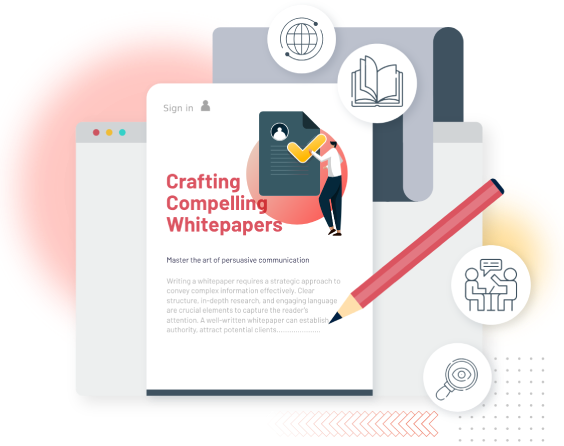

A white paper is an evidence-led business document that explains a defined problem or opportunity and helps readers decide what to do next. This guide shows you when to use one, what each section needs to accomplish, how to research it, how to distribute it, and how three common white paper types work in practice.
A white paper is an in-depth business document that investigates a defined problem or opportunity and presents analysis, evidence and practical recommendations. It is written for people who need enough context to assess an issue, compare approaches or decide what to do next. Its value comes from the quality of its question, reasoning and evidence, not from its length alone. If you need a shorter introduction to the format, start with what a white paper is and why businesses use it.
The topic needs boundaries. A paper about a broad subject can become a collection of familiar observations. A stronger paper identifies a specific audience, a decision they are facing, the circumstances that make that decision difficult, and the information needed to move forward. It then leads the reader through the problem before presenting recommendations.
White papers are often used in fields where a buying decision, policy choice or operational change requires explanation. Technology, financial services, healthcare, manufacturing and professional services all have subjects that can be difficult to assess from a short webpage. A well-made paper gives the reader a durable reference they can return to and share with colleagues.
It is useful to distinguish the format from nearby forms of content. A blog post usually introduces one idea quickly. A brochure describes an offering. A case study documents a particular organisation, situation and outcome. A report may provide findings without making a case for a course of action. A white paper combines an informed explanation of a broader problem with a reasoned response to it. It may refer to an offering, but it should not read like a sales brochure.
The central test is simple: would the document still help a reader understand the issue if the company name were removed? If the answer is no, the paper needs more evidence, explanation or independent perspective. Readers expect a white paper to teach them something useful before it asks them to consider a next step.
Use a white paper when your audience needs more than a claim. It is particularly helpful when a problem is complex, the decision involves several stakeholders, the subject needs careful definition, or your organisation has research and experience that can make the discussion clearer.
For example, a business may need a paper when it is introducing an unfamiliar category, responding to a change in regulation, explaining the implications of an industry trend, or helping buyers compare methods for solving a common problem. It can also support a longer sales process by giving technical, commercial and operational readers a common account of the issue. A separate guide explains in more detail when outside white paper support may be useful.
Start with the intended outcome. You may want to educate prospective customers, support a conversation with existing customers, build a record of subject expertise, or create a resource around a recurring question from the market. These are different goals. A paper designed to help a senior audience understand a market shift needs a different scope from one that helps a technical team evaluate implementation choices.
Ask four questions before approving the topic:
If those answers remain vague, begin with audience research rather than drafting. Customer conversations, sales questions, support requests, stakeholder interviews and industry developments can all reveal whether a proposed topic is sufficiently specific. The aim is not to find a fashionable phrase. It is to find a problem where your organisation can add a clear, well-supported point of view.
A white paper is not always necessary. A short announcement, product update, checklist or case study may be more appropriate when the reader needs a quick answer or proof from one client situation. Choose the format that matches the reader's information need. Turning a small idea into a long paper will not make it more authoritative.
Most white papers fall into a few broad types. The format can vary, but choosing the type early helps you set the depth, evidence and structure.
A problem and solution paper explains a business or industry problem, examines why it persists and presents a practical approach. This type works when readers need a framework for assessing options. It should give the problem enough space before it introduces a preferred solution.
A technical paper explains a technology, process, architecture or methodology in detail. It is useful when the audience must understand capabilities, constraints, implementation considerations or performance criteria. Technical depth should be matched to the reader. Define specialist terms when they first appear and do not assume that every stakeholder has the same knowledge.
A research or report paper presents original findings, survey results, interviews or a structured review of secondary evidence. It can help readers understand a market, trend or operating issue. Its credibility depends on transparent methods, clear sourcing and a careful distinction between evidence and interpretation.
A thought-leadership paper uses evidence and informed judgement to examine an issue that matters to a defined audience. It should give the reader a new way to frame the subject, rather than merely repeat common advice. This does not mean making broad predictions without support. It means identifying a useful question, working through it fairly and offering recommendations that follow from the analysis. See the guides to using white papers for business thought leadership and influencing industry discussions with white papers for more on that purpose.
Some papers use a numbered or guide-based format. This can work when the reader needs a sequence of decisions, stages or considerations. The list should reflect a real logic, not provide a superficial wrapper for unrelated points.
The document needs a structure that lets readers understand the argument even if they do not read every word in one sitting. The following framework can be adapted to the subject and audience. You can also compare it with this overview of what a business white paper should include.
The title should name the subject and signal the practical value of the paper. It does not need exaggerated language. A subtitle can add the audience, question or period covered. The cover should identify the publisher and make the topic clear. A table of contents is useful when the paper has several sections or when readers are likely to return to it later.
The executive summary is a concise account of the problem, the main findings and the recommendations. It is not an introduction written in different words. A busy reader should be able to understand the paper's purpose and decide whether the full document is relevant. State the answer plainly, then show where the paper will provide the supporting detail.
The introduction establishes why the issue matters now, who the paper is for, and what the paper will and will not cover. Define essential terms. If the paper focuses on a particular market, role or use case, say so. Clear scope prevents readers from treating a focused analysis as a universal claim.
Describe the situation that makes action necessary. Explain the consequences of doing nothing, the limits of current approaches and the factors that make the issue difficult. Use evidence to support material claims. This section should help readers recognise the problem in their own context without assuming that every organisation has identical circumstances.
This is the core of the paper. Present the research, relevant data, expert input, comparisons or examples that allow readers to assess the issue. Explain what the evidence shows and what it does not show. A chart, table or diagram can clarify a relationship or process, but it must have a source, a label and enough explanation to stand on its own.
Separate fact from interpretation. If you are drawing a conclusion from several sources, show the reasoning. If a figure is limited to a sample, geography or time period, state the limitation. Readers trust a paper more when it acknowledges the boundaries of its evidence.
Once the paper has established the issue, set out the options available. Where appropriate, compare the benefits, risks, costs, dependencies and suitability of each approach. Recommendations should be specific enough to guide action but not pretend that one path works for every reader. Explain the conditions under which a recommendation applies.
Readers often need help moving from a recommendation to action. This section can cover sequencing, roles, governance, measurement, change management, common obstacles and questions to ask before implementation. It is especially important in a technical or operational paper, where an attractive idea can fail if practical dependencies are ignored.
The conclusion brings the argument together. Restate the central finding and the action the reader can reasonably take next. The next step may be to assess internal readiness, discuss the findings with a specialist or use a checklist. Keep any call to action proportionate to the document. It should not interrupt the analysis or turn the conclusion into a pitch.
References let readers check important evidence and give the paper a clear audit trail. An appendix can hold methods, definitions, detailed tables or supporting material that would interrupt the main narrative. A short publisher or author note may explain relevant expertise, but it should not make unsupported claims.
Research starts with a research question, not with a search for supporting quotations. Write down the decision the reader needs to make and the evidence needed to explain it. This will guide the sources you seek and expose gaps before writing begins. The detailed guide to research for effective white paper writing explains how different research methods support different formats.
Use a source plan that includes the kinds of evidence the paper needs. Primary research, such as surveys and interviews, can provide original evidence. Secondary research, such as public documents, standards, academic work and industry reports, supplies existing evidence and context. Tertiary sources can help you map a subject, but they should lead you to the underlying evidence. Qualitative research explains experiences and reasons; quantitative research tests scale and patterns. Competitor research can reveal covered angles and unanswered questions. Give priority to sources that are close to the original evidence. Check publication dates, methodology and whether a source has an interest in the conclusion it promotes.
Interviews can provide operational detail and context that published sources cannot. Prepare focused questions, ask participants to explain terms and assumptions, and confirm quotations or sensitive factual details. An interviewee's opinion can be valuable, but it should be attributed as an opinion rather than presented as a general fact.
Keep a source record throughout the process. For every substantial claim, record the source, date, page or section, what it supports and any caveat. This makes fact checking faster and helps reviewers see where a statement came from. It also prevents a common error: carrying a statistic from a secondary article without checking the original study.
Research needs synthesis. Do not place a long sequence of facts on the page and expect readers to infer the point. Group evidence around the questions the paper is answering. When sources disagree, identify the disagreement and explain which context may account for it. When evidence is thin, narrow the claim or leave it out.
An authoritative tone is clear, not elaborate. Use plain sentences, define necessary terms and make the relationship between paragraphs explicit. Technical writing can be detailed without being difficult to follow. Each section should have one job in the argument. These five white paper writing principles cover the same path from purpose and audience to distribution.
Use headings that describe the question or subject of the section. Break long passages when the reader needs to compare steps or assess several conditions. Tables work well for comparing options, responsibilities or criteria. Visuals work best when they reduce effort, not when they decorate the page.
Examples can make an abstract point easier to understand, but they must be accurate and relevant. A case example should show what happened, the conditions that mattered and the limits of what can be learned from it. Do not use unnamed results, invented scenarios presented as fact or figures that cannot be checked.
Review the draft for balance. The paper may be published by a business with a commercial interest, but its analysis should still acknowledge alternatives, trade-offs and constraints. Readers can recognise a document that starts with a conclusion and searches for evidence afterwards.
Editing is also part of the research process. Check that every figure is still supported by the source record, that definitions remain consistent, and that the conclusion does not claim more than the evidence permits. Ask a reviewer who did not write the paper to identify assumptions that are unclear, terms that need definition and points where the argument moves too quickly. A subject-matter review is valuable when the paper covers technical, legal, financial or operational detail. The reviewer should be able to distinguish a factual correction from a difference of opinion, so that changes improve accuracy without making the document inconsistent.
Before design and publication, test the reading path. A reader who scans the title, summary, headings, tables and conclusion should still understand the central question and answer. A reader who needs more detail should be able to find the supporting evidence without hunting through the document. This check often reveals repeated points, missing transitions and visuals that need clearer captions.
Finally, check accessibility and reuse. Give tables clear headers, ensure charts have explanatory text, and make headings meaningful when read outside their visual layout. Store the editable source file, research notes and approval record together. Future reviewers then have the context required to update the paper without reconstructing its argument from the published version.
Publication is the beginning of the paper's working life. Decide how the document will reach the people it was written for. A landing page can explain the subject, audience and key questions addressed. Email can introduce the paper to readers who have already shown interest in the topic. Short excerpts can point readers to a useful finding, definition or checklist without pretending to replace the full paper. If lead capture is the main goal, use the fuller process for promoting a white paper to generate leads.
You can also adapt a paper into articles, presentations, webinars, discussion guides, sales enablement material and follow-up emails. Each version should stand on its own and retain the context needed to avoid misleading readers. Do not turn every paragraph into a promotional post. Choose parts that answer a distinct question and link them back to the complete resource.
Measure performance against the original purpose. Useful measures may include downloads, page engagement, reader feedback, qualified conversations, use by sales teams or the quality of questions the paper generates. A download count alone cannot show whether the paper helped readers understand the issue or influenced a decision. Review the evidence and feedback before deciding whether to update, expand or replace the paper.
White papers also need maintenance. Research, regulations, market conditions and product information can change. Set a review date, especially when the document contains time-sensitive information. Correct outdated statements rather than allowing an old paper to imply that it reflects current conditions.
These are planning examples, not claims about published companies or results. Each shows how the purpose changes the question, evidence, structure and next step. For a separate discussion of established formats, see these examples of successful white papers.
Suppose a firm wants to explain why an operational issue is creating delays for a defined type of buyer. The paper's question is: what causes the delay, and which response fits which circumstances? Research would combine process records, interviews with operational specialists and reliable external context. The body would define the delay, separate its causes, compare possible responses and state the conditions each response needs. A readiness checklist would help readers assess their own situation. The conclusion would invite them to complete that assessment, not jump directly to a purchase. This format is more useful than a brochure because it lets readers diagnose the issue before considering a provider.
Suppose a company has original survey data on a changing business practice. The paper's question is: what does the survey show, and where are the limits of the finding? It would explain who was surveyed, how responses were collected and which questions were asked. The findings section would distinguish observed patterns from the company's interpretation. Subgroup comparisons would appear only when the sample supports them. The discussion would explain what different roles may learn without treating the sample as the whole market. The next step might be to compare the findings with the reader's own data. The value lies in transparent methods and careful interpretation, not in a dramatic headline.
Suppose a technical team needs to explain a system change to specialist and non-specialist stakeholders. The paper's question is: what will change, what depends on it, and what must be decided before implementation? A summary would give leaders the decision and its main implications. The technical sections would define the architecture, interfaces, dependencies, implementation choices and risks. A comparison table could show which option suits each operating condition, while diagrams would make the system relationships visible. The conclusion would give each stakeholder a role-specific next step. This structure lets different readers use the same document without removing detail that technical reviewers need.
In each case, the paper begins with the reader's question. It earns attention by answering that question carefully, then gives the reader a sensible next step.
It should be long enough to answer a defined question with adequate evidence and no longer. Scope, audience and subject complexity should determine the length. Plan the structure before drafting so the document does not become a collection of loosely related sections.
Yes, if it is relevant to the problem being discussed. The paper should first help the reader understand the issue, the options and the evidence. Product information must be accurate and should not replace analysis.
A clear question, sound research, transparent sourcing, accurate interpretation and practical recommendations all contribute to credibility. Credibility is weakened by unsupported numbers, selective evidence, vague claims and promotional language.
That depends on the publication goal and the reader's expectations. Gating may support lead capture, while open access may broaden reach and make the paper easier to share. Choose the approach based on the value exchange and measure whether it supports the purpose of the paper.
Review it when the evidence, regulations, market context or recommendations may have changed. Time-sensitive research should have an explicit review schedule. A paper that remains current is more useful than one that keeps an old publication date and outdated claims.
A useful white paper gives readers a clearer understanding of a difficult decision. Begin with a specific question, research it carefully, structure the evidence logically and make recommendations that follow from the analysis. When the paper is published and maintained as a practical resource, it can support informed conversations long after its launch.

I have read and accept the Privacy Policy
Read More