In 2019, a promising e-commerce startup launched a beautifully designed website, expecting a surge in traffic and sales. However, despite their extensive product listings and engaging content, their pages barely ranked on search engines. After months of struggle, an SEO audit revealed the issue, while their content was rich and relevant, technical flaws like slow page speed, broken links, and poor mobile optimization were holding them back. If the story feels similar to your business, this blog is for you. Keep Reading!
Achieving a strong online presence requires more than just great content or a well-structured website, it demands a balanced SEO strategy. Search Engine Optimization (SEO) is built on multiple components, with Technical SEO and Content SEO being two of the most critical. Understanding their roles, differences, and how they work together is key to building an effective strategy that drives organic traffic and improves visibility.
What is Technical SEO
Technical SEO refers to the process of optimizing a website’s infrastructure to ensure that search engines can efficiently crawl, index, and understand its content. Unlike Content SEO, which focuses on keywords and user engagement, Technical SEO deals with the behind-the-scenes factors that affect how a site performs in search rankings.
Why Technical SEO Matters
Search engines like Google use automated bots (crawlers) to navigate websites and determine their relevance to search queries. If a website is slow, difficult to navigate, or has structural issues, search engines may struggle to index its pages correctly, which can lead to lower rankings. Technical SEO ensures that all technical aspects of a website support smooth crawling, indexing, and ranking.
Key Components of Technical SEO
- Website Architecture and Navigation: A clear and logical site structure ensures that search engine bots can efficiently crawl and index your website. Intuitive navigation enhances user experience, encouraging visitors to explore more pages.
- Page Load Speed: Fast-loading pages are favored by both users and search engines. Optimizing images, leveraging browser caching, and minimizing code can significantly improve load times.
- Mobile Optimization: With the prevalence of mobile browsing, ensuring your website is responsive and mobile-friendly is imperative. A mobile-optimized site adapts seamlessly to various screen sizes, providing a consistent user experience.
- Secure Sockets Layer (SSL) Implementation: Securing your website with an SSL certificate (HTTPS) not only protects user data but also serves as a ranking signal for search engines.
- XML Sitemaps and Robots.txt Files: An XML sitemap guides search engines to your important pages, while a robots.txt file instructs them on which parts of your site to crawl or avoid.
- Canonical Tags: These tags help prevent duplicate content issues by specifying the preferred version of a webpage, ensuring that search engines index the correct page.
- Structured Data Markup (Schema): Implementing schema markup helps search engines understand the context of your content, potentially enhancing the way your pages are displayed in SERPs.
By addressing these technical elements, you create a solid foundation that allows search engines to access, interpret, and rank your website more effectively.
Exploring Content SEO
Content SEO is about creating and optimizing website content to match what users are searching for while ensuring that search engines can easily find and rank it. This involves writing valuable, relevant, and well-structured content that answers user queries and keeps them engaged. Understanding what SEO writing is and how it differs from general content writing is the first step toward mastering Content SEO.
Why Content SEO Matters
Search engines prioritize content that is useful, original, and engaging. When your website provides clear, well-researched, and properly formatted content, it increases the likelihood of ranking higher in search results. This means more organic traffic, better engagement, and improved conversions.
Key Components of Content SEO
- Keyword Research and Integration: Identifying relevant keywords that your target audience uses enables you to create content that meets their search queries. Strategically incorporating these keywords into your content enhances its discoverability.
- High-Quality Content Creation: Producing informative, engaging, and original content establishes your authority in your niche and encourages users to spend more time on your site.
- On-Page Optimization: Optimizing elements such as title tags, meta descriptions, headers, and image alt text helps search engines understand the context and relevance of your content.
- Internal Linking: Linking to other relevant pages within your site aids in distributing link equity and guides users to additional valuable content, enhancing their experience.
- Content Freshness: Regularly update your content signals to search engines so that your site remains current and relevant, which can positively impact rankings.
- User Engagement Metrics: Engaging content encourages users to interact with your site, leading to lower bounce rates and higher dwell times, factors that search engines consider when ranking pages.
By focusing on these aspects, Content SEO ensures that your website provides value to users, addressing their needs and queries effectively.
Technical SEO vs. Content SEO: A Comparative Analysis
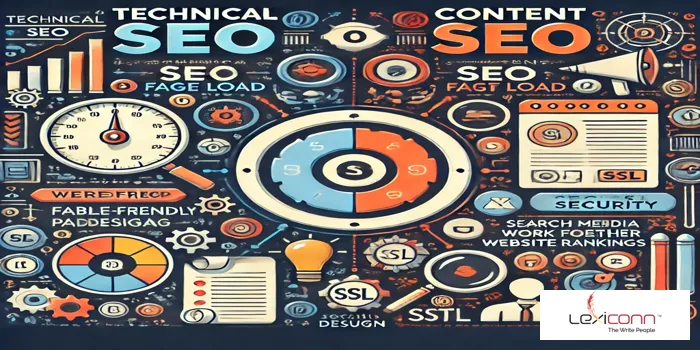
ALt-text: Difference between Technical SEO and Content SEO
While both Technical SEO and Content SEO aim to improve your website's visibility and performance, they operate in distinct yet complementary ways.
Focus and Objectives
- Technical SEO: Concentrates on the infrastructure of your website, ensuring that it is accessible, fast, and understandable to search engines.
- Content SEO: Focuses on the substance of your website, creating content that is relevant, valuable, and aligned with user intent.
Importance in SEO Strategy
According to First Page Sage, technical SEO accounts for approximately 30% of the Google Ranking Algorithm, serving as a prerequisite for ranking. In contrast, content-based factors constitute around 50% of a website’s ability to rank highly, emphasizing the significance of high-quality content.
Interdependence
A well-optimized website structure (Technical SEO) enhances the effectiveness of your content (Content SEO) by ensuring it is accessible and easily understood by search engines. Conversely, high-quality content provides the substance that search engines need to rank your site favorably.
The Interdependence of Technical SEO and Content SEO
Neither Technical SEO nor Content SEO can function optimally in isolation. A technically sound website that lacks high-quality content will struggle to engage users and rank well. Likewise, engaging content that is not technically optimized may not be discovered by search engines.
How They Work Together:
- Technical SEO ensures that search engines can find, crawl, and index the content effectively. Without proper indexing, even the best content will not appear in search results.
- Content SEO provides value to users, keeping them engaged and encouraging longer site visits. This helps improve metrics such as bounce rate and dwell time, which are ranking factors.
- Technical SEO supports Content SEO by improving page speed and mobile-friendliness. If pages take too long to load, even the best content won’t hold a visitor’s attention.
- Proper URL structuring and internal linking (Technical SEO) help distribute link equity and guide visitors to relevant content (Content SEO). Following URL structure SEO best practices ensures that every page is discoverable and supports your content hierarchy.
Common Mistakes Businesses Make
Overlooking Technical SEO:
- Failing to optimize page speed and mobile usability.
- Ignoring crawl errors and broken links.
- Not using structured data markup for better SERP visibility.
Neglecting Content SEO:
- Producing thin or duplicate content with little value.
- Not targeting the right keywords or overusing them unnaturally.
- Ignoring user intent and engagement metrics.
Integrating Technical and Content SEO for Optimal Results
To achieve a comprehensive SEO strategy, it's essential to integrate both Technical and Content SEO.
Steps to Harmonize Technical and Content SEO
- Conduct a Technical SEO Audit: Regularly assess your website's technical health using tools like Google Search Console and PageSpeed Insights to identify and rectify issues.
- Perform Keyword Research: Understand the search terms your target audience uses and develop content that addresses these queries.
- Create a Content Calendar: Plan and schedule regular content updates to keep your site fresh and engaging.
- Optimize On-Page Elements: Ensure that each piece of content includes optimized title tags, meta descriptions, headers, and internal links.
- Monitor User Engagement: Use analytics tools to track metrics like bounce rate, dwell time, and conversion rates to gauge content effectiveness and make necessary adjustments.
- Stay Updated with SEO Trends: SEO is an evolving field; staying informed about algorithm updates and industry best practices ensures your strategy remains effective.
Steps to Achieve a Balanced SEO Strategy
- Conduct an SEO Audit: Assess both technical and content aspects of your site using tools like Google Search Console and PageSpeed Insights.
- Optimize Technical Elements First: Ensure your website is crawlable, fast, and mobile-friendly before focusing on content improvements.
- Develop a Content Plan: Research keywords and create high-quality, informative, and engaging content tailored to your audience.
- Implement On-Page SEO: Use clear headings, meta descriptions, and structured content formatting.
- Monitor Performance and Adapt: Use analytics to track how your site performs and make necessary improvements.
Bottom Line
Technical SEO lays the groundwork, while Content SEO ensures your site remains relevant and engaging. Businesses should assess their current challenges and allocate resources accordingly. A well-rounded approach to technical SEO and content SEO is the key to maximizing online visibility and business growth. For actionable steps on the technical side, reviewing the top technical SEO best practices will help you prioritize the most impactful fixes.
By combining both strategies, businesses can build a website that not only ranks well but also delivers real value to users, driving organic traffic and long-term success.
Even the most compelling content won’t rank if your website isn’t technically optimized. Search engines and users expect speed, security, and a seamless experience, without these, your traffic and conversions take a hit. At LexiConn, we take a complete approach to SEO, ensuring that both Technical SEO and Content SEO work together for sustainable growth.
How LexiConn Helps Enhance Your Website’s Performance:
Source
✅ SEO Performance Audit – We analyze technical SEO, keyword strategy, and site architecture to uncover and fix ranking issues.
✅ User Experience & Mobile Optimization – We refine navigation, accessibility, and mobile responsiveness to improve engagement.
✅ Page Speed & Core Web Vitals Enhancement – Our team identifies load time bottlenecks and optimizes site performance for faster response times.
✅ Security & Compliance Review – From HTTPS implementation to data privacy best practices, we ensure your website meets security standards.
✅ Content Strategy & Effectiveness Review – We assess keyword relevance, structure, and engagement to maximize visibility and impact.
A Search-Friendly Website Starts with the Right Foundation
Every second of delay, every technical glitch, and every missed optimization opportunity can cost you valuable traffic. But these challenges are fixable. With LexiConn’s expert website audits, you get a data-driven strategy to enhance performance, improve search rankings, and create a seamless user experience.
Don’t let an underperforming website slow down your business. Schedule your FREE 30-minute website audit consultation with LexiConn. Visit www.lexiconn.in or email book a free consultation to get started.
Boost your Content Strategy.Download the Free eBook now.
Unlock Generative AI's potential for content marketing success. Unearth its impact on teams and businesses. Witness real-life examples and case studies, showcasing AI-driven content ingenuity.