

(Source)
(Alt-text: Best way to showcase business success)
Building a strong SME brand requires more than just great products or services, it demands trust, credibility, and proof of success. While marketing campaigns and social media presence help create awareness, customers today seek authentic validation before making purchasing decisions. That’s where case studies vs. testimonials come in. To first understand the core value of case studies in building this kind of trust, read about what a case study is and why it is important for your business.
Both case studies and testimonials serve as powerful tools to showcase real customer success stories, but they serve different purposes. A well-written case study provides in-depth insights into a customer’s journey, highlighting specific challenges, solutions, and measurable results. On the other hand, a testimonial is a quick, impactful statement from a satisfied client, offering instant credibility and emotional appeal. For real-world benchmarks on what makes a case study stand out, explore examples of effective case studies and what makes them stand out.
So, which one is better for SME branding?The answer depends on your business goals, audience, and content strategy. In this blog, we’ll break down case studies vs. testimonials, explore their unique advantages, and help you decide the best way to showcase business success.
Before diving into which one works best, let’s define what case studies vs. testimonials actually are and how they differ.
A case study is a detailed success story that showcases how a business helped a customer solve a problem. It provides specific, measurable outcomes, making it a valuable tool for content marketing using case studies to attract potential clients. For a practical walkthrough on producing one, use this step-by-step guide to writing a case study.
Key Features of a Case Study:
For SMEs, case studies help demonstrate industry expertise, credibility, and real results, making them particularly effective for B2B marketing and high-value service offerings.
A testimonial is a brief endorsement from a customer that highlights their positive experience with your business. Testimonials are shorter, more direct, and emotionally driven, making them ideal for quick brand validation.
Key Features of a Testimonial:
For SMEs, testimonials work best in high-volume, fast-moving industries, where potential customers need quick reassurance before making a purchase.
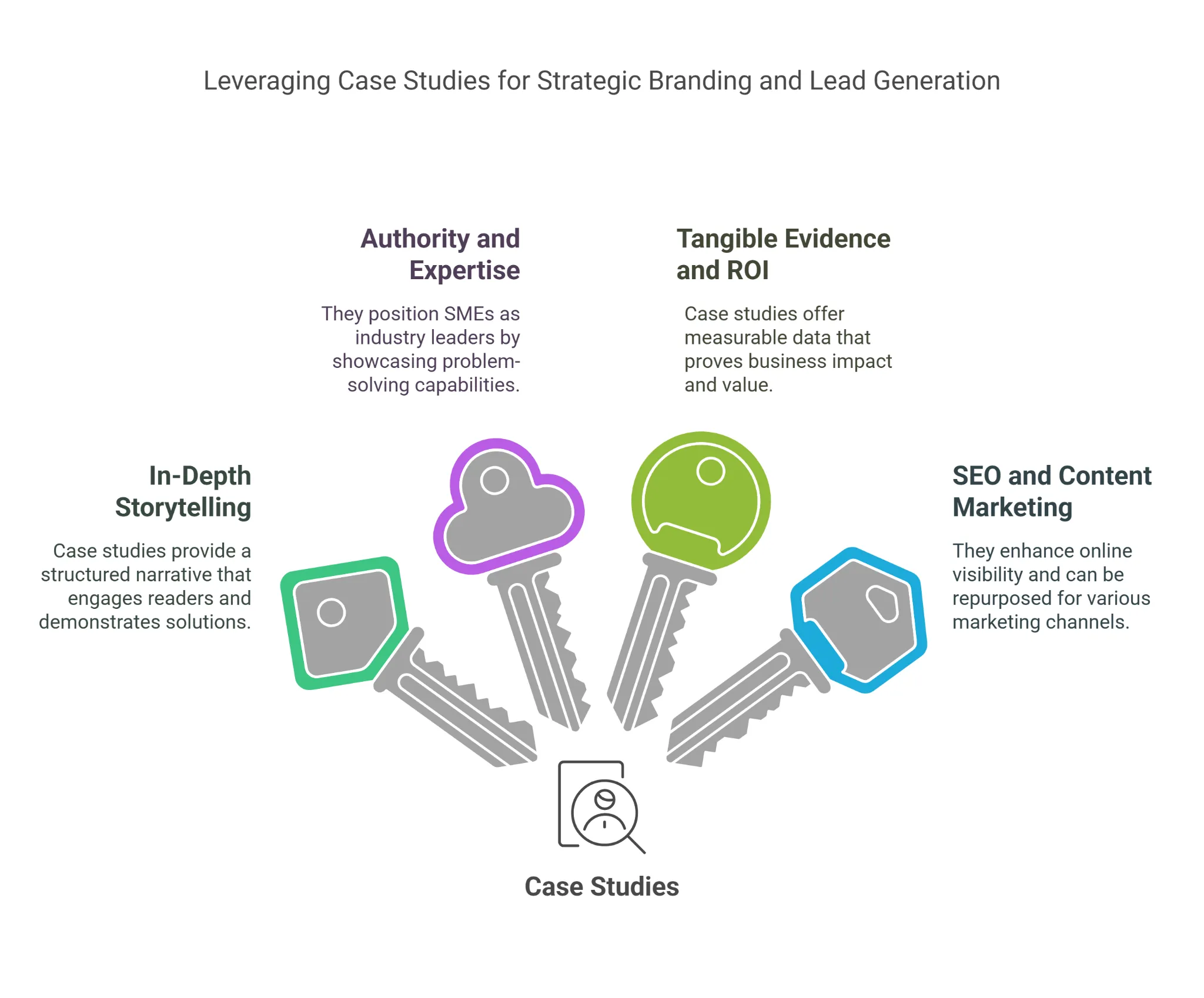
When considering case studies vs. testimonials, SMEs must recognize the unique advantages case studies offer for branding and lead generation. Unlike short testimonials, case studies provide deeper insights, hard data, and strategic storytelling, making them an essential tool for content marketing.
Case studies tell a story. They follow a problem-solution-results format, guiding potential customers through real-world business challenges and demonstrating how your company solves them. This makes them highly effective for B2B businesses, service-based industries, and high-ticket sales cycles, where buyers need more than just a short customer quote.
A well-crafted case study should include:
For example, an SME offering logistics software might publish a case study on how their platform reduced shipping costs for a retail company by 30% in six months. This structured narrative builds credibility, showing potential customers exactly what results they can expect.
One of the biggest advantages of case studies is their ability to position SMEs as industry experts. While testimonials rely on customer opinions, case studies provide concrete evidence of a company’s expertise in solving industry-specific challenges.
According to aWyzowl study, 89% of marketers say case studies and customer success stories are the most effective content for influencing purchasing decisions. This is because:
✔ Case studies demonstrate problem-solving abilities in a structured way.
✔ They provide a competitive edge over businesses that rely solely on testimonials.
✔ They build long-term trust, making them valuable assets for lead generation.
For example, an SME specializing in cloud security services can showcase a case study on how they helped a fintech company prevent cyberattacks, reducing breach risks by 50%. This not only attracts more leads but also builds credibility in a niche market.
A major limitation of testimonials is that they often lack specific data. Phrases like "Great customer service!" or "This product changed my business!" sound positive, but they don’t provide measurable proof.
In contrast, case studies showcase actual business impact with clear metrics and KPIs, such as:
For example:
📌 Instead of just saying, "Our marketing services helped a business grow," a case study would state: "Our SEO strategy increased organic traffic by 75% and lead generation by 40% in six months."
This quantifiable success builds confidence in potential customers who are evaluating real ROI before making a purchase.
Beyond credibility, case studies are a powerful content marketing tool that boosts SEO rankings and drives long-term traffic. Unlike testimonials (which are often short and non-indexed), case studies:
✔ Include relevant industry keywords, improving search visibility.
✔ Generate long-form content that ranks better on Google.
✔ Encourage backlinking, as businesses reference them in industry discussions.
Additionally, content marketing using case studies allows SMEs to repurpose success stories into:
📌 Blog posts
📌 Whitepapers
📌 Email marketing campaigns
📌 LinkedIn articles
This means that a single case study can serve multiple marketing purposes, maximizing ROI while keeping your content fresh and engaging.
|
Read: The Complete Guide to Conducting a Technical SEO Audit |
When comparing case studies vs. testimonials, it’s clear that while case studies offer depth and data, testimonials provide quick, emotional validation. They serve as instant credibility boosters that can be leveraged across multiple marketing channels to influence purchasing decisions.
Let’s explore the unique strengths of testimonials and why they are an essential tool for SME branding.
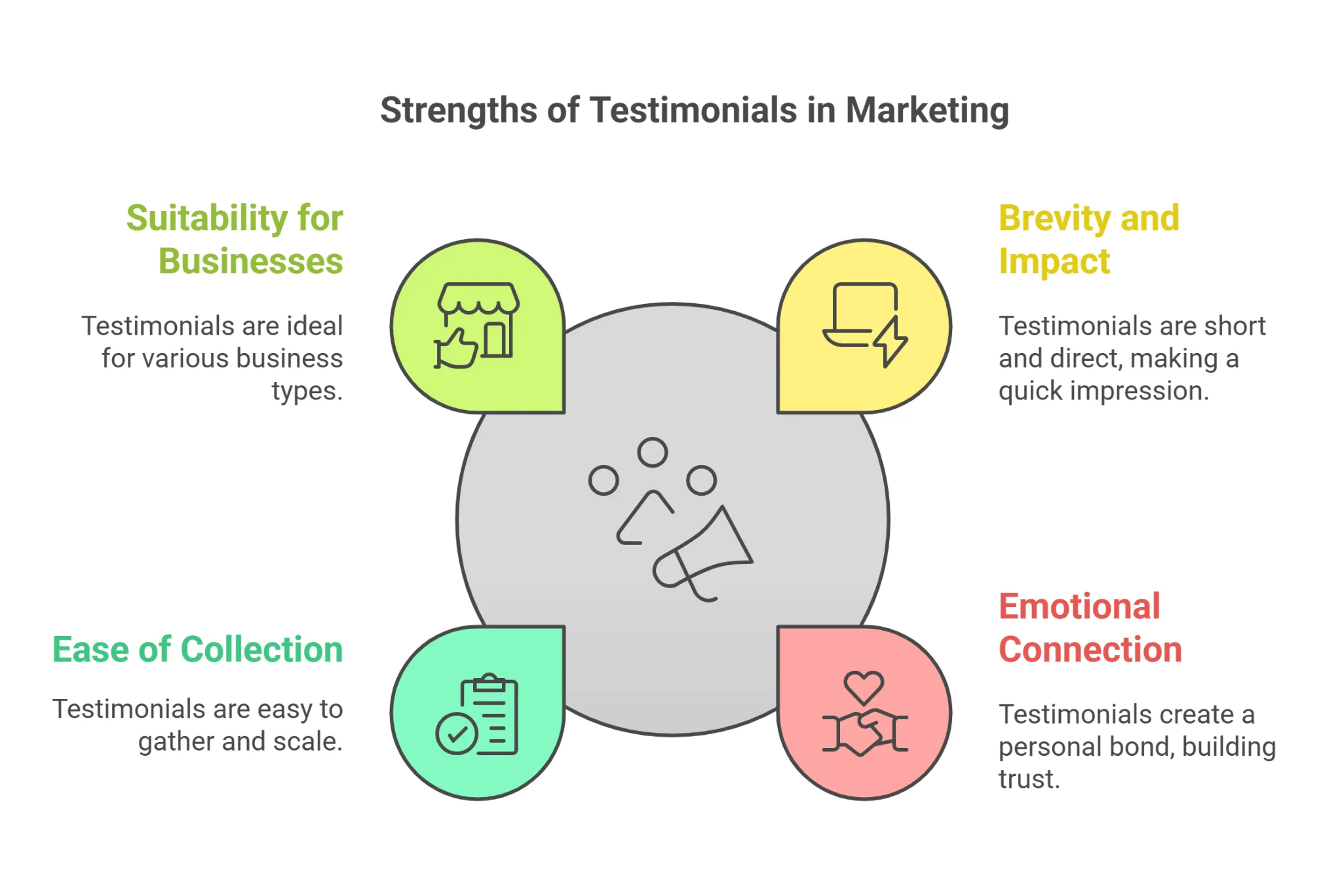
One of the biggest advantages of testimonials is their brevity and immediate impact. Unlike case studies that require detailed analysis, testimonials are:
✔ Short and direct, usually 1-3 sentences long.
✔ Easy to understand, requiring minimal effort from the reader.
✔ Highly engaging, creating an emotional connection instantly.
In today’s fast-paced digital world, attention spans are shorter than ever. Research from Nielsen Norman Group states that users typically leave a webpage within 10-20 seconds if they don’t find compelling content. Testimonials fit perfectly into this landscape, delivering instant trust signals without overwhelming the audience.
📌 For example, instead of reading a 1,500-word case study, a visitor to an SME’s website might see a bold, one-line testimonial like:
"This software saved our team 10 hours a week, highly recommended!"
This immediate validation helps convert potential customers faster.
Testimonials leverage the power of human emotion. A well-placed customer quote:
✔ Creates social proof, showing that real people trust your brand.
✔ Builds emotional credibility, reinforcing positive brand perception.
✔ Helps hesitant buyers feel reassured about their decision.
📌 For instance, a small business selling organic skincare products can use testimonials like:
"I struggled with sensitive skin for years, but this moisturizer transformed my routine!"
Unlike case studies, which often focus on statistics and business impact, testimonials tap into personal experiences, making them more relatable and persuasive.
While case studies require extensive research, approvals, and data collection, testimonials are easier to obtain and can be scaled quickly.
✔ They require minimal time from customersa simple 1-2 sentence review is enough.
✔ They don’t need formal formatting, making them versatile for marketing.
✔ They can be collected through surveys, emails, or automated review requests.
For SMEs with limited marketing budgets, this makes testimonials an efficient and scalable way to build credibility.
📌 For example, an e-commerce business can request customer feedback immediately after purchase, turning happy buyers into brand advocates.
By streamlining testimonial collection, SMEs can create a steady flow of social proof without needing to invest heavily in content creation.
Testimonials work exceptionally well for:
✔ B2C businesses with fast sales cycles (e.g., fashion, wellness, tech products).
✔ Local businesses that rely on word-of-mouth credibility (e.g., cafes, fitness studios).
✔ Service providers where customer satisfaction is the key selling point (e.g., digital agencies, consultants).
For instance, an SME offering digital marketing services might showcase this testimonial:
"Within two months, our website traffic doubled thanks to their SEO strategy!"
This instantly builds trust, encouraging potential clients to take action faster.
Now that we’ve explored the unique strengths of case studies and testimonials, the question remains: Which one is the better branding tool for SMEs? The truth is, there’s no one-size-fits-all answer. The effectiveness of case studies vs. testimonials depends on the business model, target audience, and marketing objectives.
Some businesses need in-depth, data-driven proof to persuade decision-makers, while others rely on quick emotional appeal to drive conversions. Understanding when to use case studies and when to leverage testimonials can help SMEs craft a powerful content strategy that attracts and converts the right customers.
The type of content an SME should prioritize depends on what they are trying to achieve.
For example, a tech solutions provider targeting enterprise clients would benefit more from case studies that highlight complex problem-solving and tangible ROI. Meanwhile, a local fitness studio would find testimonials more impactful, as potential clients are looking for personal success stories and quick reassurance before signing up.
While case studies and testimonials serve different purposes, the most effective SME branding strategy doesn’t involve choosing just one, it’s about strategically using both.
A potential customer might see a testimonial on social media, which sparks interest. Later, when they’re considering making a purchase, a detailed case study on the company’s website could provide the necessary validation to seal the deal.
By integrating both into their content marketing strategy, SMEs can:
A hybrid strategy allows businesses to capture attention quickly while also providing in-depth validation for those who need it.
For SMEs, crafting compelling, results-driven content is essential for growth, but it requires expertise, strategy, and execution. That’s where LexiConn comes in.
As a leading content marketing agency, we help SMEs develop impactful case studies and testimonials that build brand authority, enhance engagement, and drive sales.
Our approach ensures that every customer success story is optimized for maximum impact, whether it’s a detailed case study for SEO and lead generation or a powerful testimonial for instant brand credibility.
Your customer success stories are powerful marketing assets, but they need to be structured strategically to create maximum impact. Let LexiConn help you develop compelling case studies and testimonials that drive real results.
89% of marketers consider customer testimonials and case studies as the most effective content forms for influencing purchases.
In the dynamic landscape of SME branding, both case studies and testimonials have proven to be instrumental. By leveraging detailed narratives and authentic customer voices, SMEs can build trust, demonstrate value, and drive growth.
At LexiConn, we specialize in crafting compelling case studies and testimonials that resonate with your target audience, enhancing your brand's credibility and fostering lasting relationships. Partner with us to effectively showcase your success stories and elevate your brand's presence in the market.
Want to showcase your brand’s success stories effectively? Book aFREE 30-minute content audit consultation today! Visitwww.lexiconn.in or email book a free consultation.
I have read and accept the Privacy Policy
Read More