
(Source)
Lead generation is the lifeblood of business growth, but many companies struggle to convert website visitors into leads. A poorly optimized website can quietly erode your conversion potential even with great content and strong marketing efforts.
Studies reveal that businesses with well-optimized websites generate up to 67% more leads than those with slow, unstructured, or outdated sites. Why? Because website performance, user experience, and SEO conversion optimization directly influence how visitors engage with your brand.
A website audit is the most effective way to identify hidden issues affecting your SEO leads and overall conversions. From slow page speed and broken CTAs to weak SEO strategies, a thorough audit uncovers the barriers stopping visitors from taking action.
In this blog, we’ll explore how website audits improve lead generation, the most common issues affecting conversions, and how you can leverage audits to maximize your website’s potential in 2025.
Your website isn’t just a digital storefront, it’s a lead-generation machine. Every second a visitor spends on your site, every click and every page they navigate affects whether they convert into a lead or leave for a competitor.
However, most websites are riddled with hidden performance issues that silently drive potential customers away.
A comprehensive website audit helps businesses fix these conversion killers, ensuring SEO strategies for more leads and seamless user experiences that drive engagement.
When a website runs at peak performance, the results are undeniable: higher organic traffic, more substantial SEO conversion rates, and an effortlessly working lead-generation funnel.
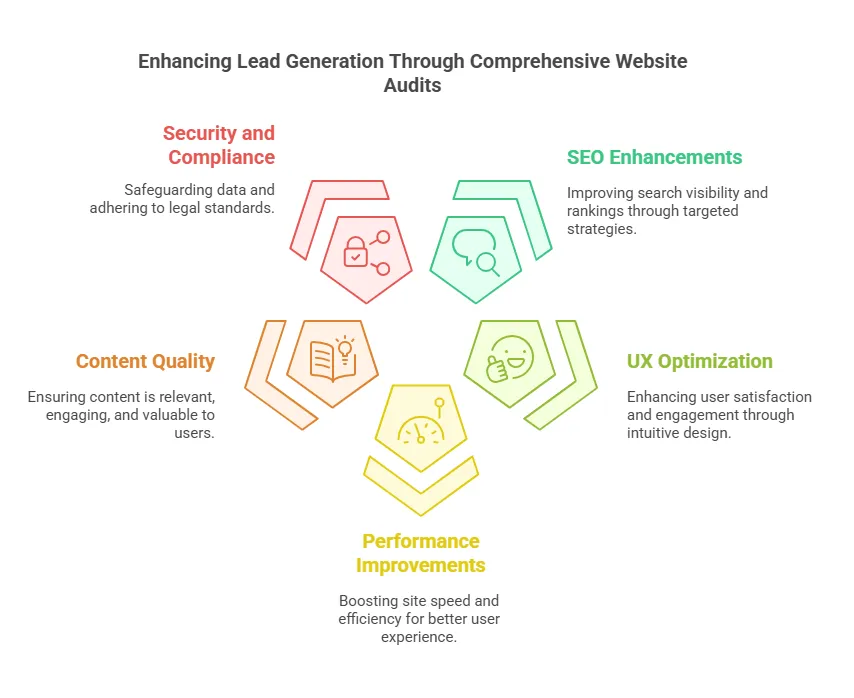
A thorough website audit examines various facets of your site to identify and rectify issues that may hinder lead generation. Here are the primary areas where audits make a substantial impact:
SEO is pivotal in driving organic traffic to your website. An audit assesses:
Addressing these elements will make your site more visible to potential leads actively searching for your products or services.
A positive user experience is crucial for keeping visitors engaged and encouraging them to take desired actions. Key UX factors include:
Improving these aspects reduces bounce rates and increases the likelihood of visitors converting into leads.
Website performance directly affects user satisfaction and conversion rates. An audit focuses on:
Optimizing these elements leads to a smoother user experience, encouraging visitors to stay longer and engage more deeply with your content.
High-quality, relevant content is a cornerstone of effective lead generation. An audit evaluates:
By refining your content strategy based on audit findings, you can better meet the needs of your audience and guide them through the conversion funnel.
Trust is a critical factor in lead generation. An audit examines:
Addressing security concerns protects your business and reassures visitors, making them more likely to convert into leads.
With mobile devices accounting for approximately half of web page views worldwide, ensuring your website is mobile-friendly is no longer optional. A website audit assesses your site's mobile responsiveness, focusing on:
Enhancing mobile usability allows you to cater to a broader audience, reduce bounce rates, and increase the likelihood of lead conversions.
Understanding user behavior is pivotal for effective lead generation. A comprehensive audit includes:
These insights enable data-driven decisions to refine your website and marketing strategies, ultimately enhancing lead-generation efforts.
Building trust with your audience is essential for converting visitors into leads. An audit evaluates the presence and effectiveness of trust signals, including:
Incorporating these elements can alleviate potential customer hesitations, thereby increasing conversion rates.
A well-structured website enhances both user experience and search engine crawlability. Key aspects to audit include:
Optimizing these technical elements facilitates better search engine rankings and a more intuitive user experience, contributing to increased lead generation.
|
Read: The Complete Guide to Conducting a Technical SEO Audit |
Making your website accessible ensures all users, including those with disabilities, can navigate and interact with your content. An audit assesses:
Adhering to accessibility standards can expand your potential audience and demonstrate inclusivity, which can enhance your brand reputation and lead generation efforts.
By meticulously auditing and optimizing these areas, businesses can create a website environment that attracts visitors and converts them into leads. This comprehensive approach ensures that your website is a powerful tool in your lead-generation strategy.
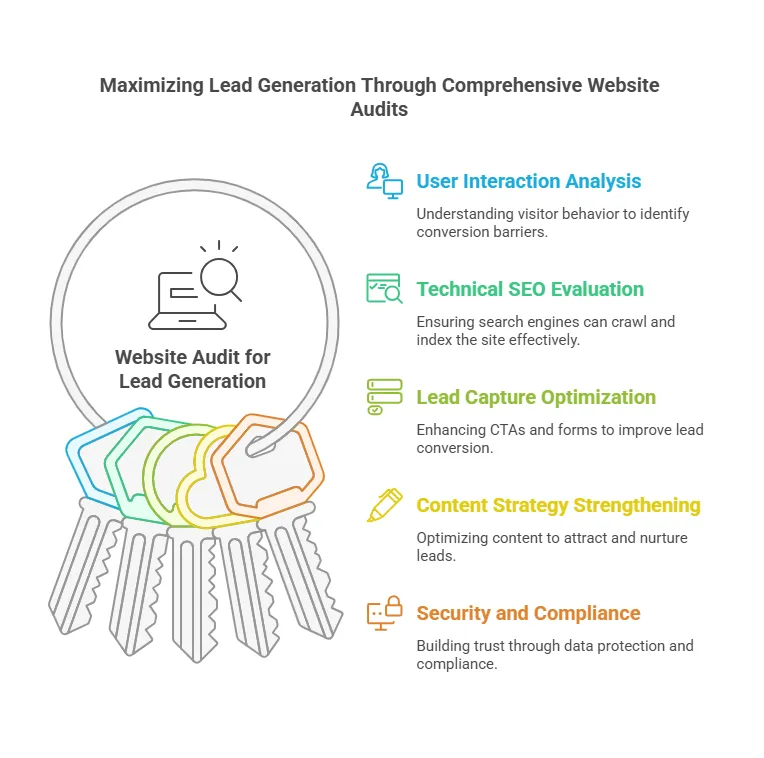
A website audit is more than just a technical check, it’s an opportunity to identify performance gaps, uncover conversion roadblocks, and fine-tune your SEO strategy for maximum lead generation. Here’s how businesses can conduct an effective audit that directly impacts conversions.
Step 1: Understand How Users Interact with Your Website
Before making any changes, you need to analyze visitor behavior to determine what’s working and what’s not.
Start by using Google Analytics to track:
These insights help pinpoint weak spots preventing visitors from converting into leads.
Step 2: Evaluate Your Website’s Technical SEO
A website riddled with SEO issues won’t attract the right traffic, no matter how good your offerings are. Your audit should focus on:
Fixing these issues enhances search visibility, helping qualified leads find your business organically.
Step 3: Optimize Your Lead Capture & Conversion Elements
A website might attract traffic, but are visitors converting into leads? A strong audit evaluates:
These refinements ensure your website is attracting visitors and actively converting them into potential customers.
Step 4: Strengthen Your Content Strategy for SEO Leads
Content is the driving force behind organic lead generation. A website audit helps assess the following:
Optimized content plays a crucial role in nurturing website visitors into ready-to-buy leads.
Step 5: Fix Security & Compliance Issues
Website security isn’t just about protecting data but building trust. An audit should check the following:
A secure and compliant website boosts credibility and enhances conversion rates.
At LexiConn, we don’t just conduct website auditswe transform your site into a lead-generation powerhouse. A poorly optimized website can quietly drain your business of potential leads, but a strategic audit helps you uncover opportunities to maximize conversions.
✔ SEO Optimization – Improve rankings and attract high-intent SEO leads.
✔ Performance Enhancements – Boost site speed and eliminate technical errors.
✔ Conversion Rate Optimization (CRO) – Strengthen CTAs, landing pages, and user experience.
✔ Mobile & Security Audit – Ensure your site is mobile friendly and fully secure.
Our data-driven approach helps businesses identify bottlenecks, refine their lead-generation strategy, and unlock higher conversions.
Your website isn’t just an online presence, it’s your primary tool for attracting and converting leads. But you lose valuable business opportunities daily if your site has technical flaws, slow speed, or ineffective conversion strategies.
A website audit is the foundation of a high-performing lead-generation strategy. By identifying weak spots and optimizing SEO, user experience, and conversion pathways, businesses can generate up to 67% more leads, without spending extra on ads or marketing campaigns.
So, ask yourself: Is your website helping you grow, or holding you back?
If you’re ready to turn your website into a profitable ROI-backed lead-generating avenue, don’t leave it to guesswork. Let the experts at LexiConn help you uncover missed opportunities, fix performance gaps, and maximize your conversions.
Book a FREE 30-minute website audit consultation today. Visit www.lexiconn.in or email book a free consultation to get started.

I have read and accept the Privacy Policy
Read More