

(Source)
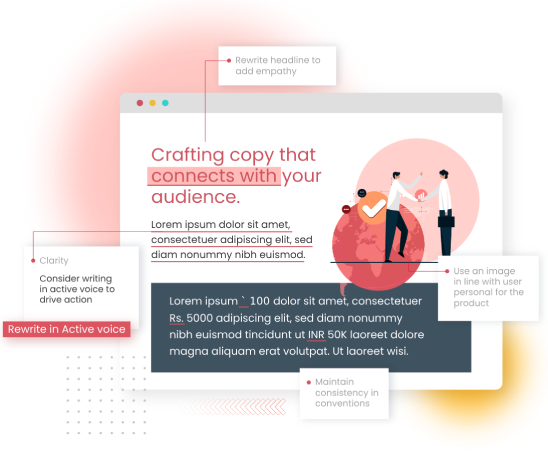
Your website is more than just a digital storefront, it’s your most substantial sales and marketing asset. But is it performing at its peak?
A poorly optimized website means missed opportunities, lower search rankings, and a frustrating user experience. Studies show that 88% of visitors won’t return after a bad experience. The solution? A comprehensive website audit.
A website audit identifies performance gaps, SEO weaknesses, and technical issues that could be costing you traffic and conversions. It’s not just about fixing problems, it’s about unlocking hidden growth opportunities.
In this blog, we’ll cover why regular website audits are essential for businesses looking to stay ahead in 2025. We’ll explore the key benefits of audits, how they improve search rankings, enhance user experience, and boost revenue, and why failing to conduct them can cost businesses dearly.
A comprehensive website audit encompasses several critical areas. Here’s a breakdown of the key components:
A well-structured website audit helps uncover hidden opportunities, fix existing flaws, and optimize your website for maximum business impact.
|
Read: >The Complete Guide to Conducting a Technical SEO Audit |

A website audit is more than just a technical check, it’s a strategic business necessity. In today’s fast-evolving digital landscape, businesses that fail to conduct regular audits risk losing search visibility, customer trust, and revenue opportunities.
In 2025, search engine optimization (SEO) remains a cornerstone of online visibility. An SEO audit is crucial to a complete website audit because it helps you understand how well your website ranks in search engine results pages (SERPs).
An SEO audit identifies whether your website is targeting the right keywords and if those keywords are effectively incorporated into your content, meta descriptions, and title tags.
Are you targeting "website audit," "SEO audit," and "website optimization" effectively? What about long-tail keywords like "Why website audits are important for businesses" and "How website audits impact SEO rankings"?
Audits uncover technical issues, such as broken links, crawl errors, and indexing problems, that may hinder your website's search engine performance.
A backlink audit assesses the quality and relevance of your website's backlink profile, identifying toxic links that could harm your rankings.
Addressing these SEO factors through regular audits can improve your website's ranking, attract more organic traffic, and reach a wider audience.
User experience is paramount in 2025. If your website is challenging to navigate, slow to load, or visually unappealing, visitors will quickly abandon it for a competitor's site. As part of your website audit, a UX audit helps you identify and address usability issues that may be hindering conversions.
You can increase engagement, reduce bounce rates, and drive more conversions by improving UX through website audits.
Website security is more critical than ever in an era of increasing cyber threats. A security audit identifies vulnerabilities in your website's code, infrastructure, and security protocols, helping protect your data and customers' information.
By prioritizing website security through audits, you can protect your business from costly data breaches, maintain customer trust, and ensure regulatory compliance.
Website speed and performance are critical factors in user experience and SEO. A performance audit identifies bottlenecks and areas for improvement, helping you optimize your website for faster loading times and smoother performance.
By optimizing website performance through audits, you can improve user experience, reduce bounce rates, and boost your SEO rankings.
Content is king, but only if it's high-quality, relevant, and engaging. A content audit assesses the effectiveness of your website's content and identifies areas for improvement.
|
Case Study: How LexiConn’s Website Audit Boosted Leads for Ephanti AI & ICICI LexiConn conducted a website audit focusing on content restructuring, speed optimization, and CTA enhancements. Regular audits maximize business potential, ensuring your website remains a high-performing asset. |
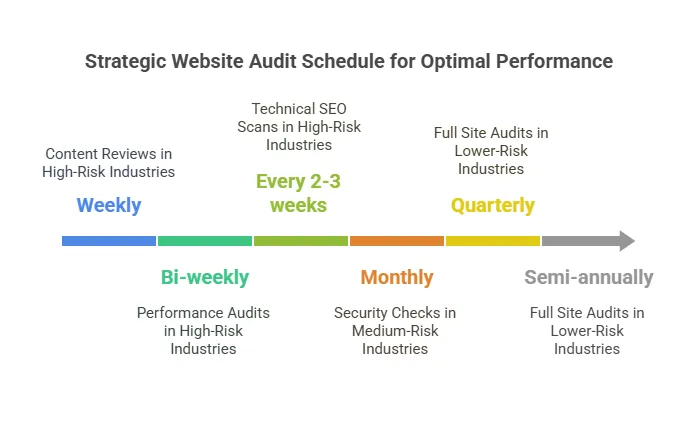
The optimal schedule for website audits isn't one-size-fits-all but should align with your organization's needs and risk profile. Here's a detailed breakdown of recommended audit frequencies for different business scenarios:
Financial Services, Healthcare, E-commerce
B2B Services, Professional Services, Local Businesses
Informational Sites, Personal Blogs
Beyond regular schedules, certain events should automatically trigger website audits:
In addition to comprehensive audits, it's also essential to conduct regular mini-audits or spot checks to monitor key performance indicators (KPIs) and identify any immediate issues that must be addressed.
As the digital landscape evolves, so do the tools and methodologies behind effective website audits. In 2025, staying ahead means embracing cutting-edge technologies and strategies that redefine how audits are conducted. Here’s what’s shaping the future of website audits:
1. AI-Driven Audits:Artificial Intelligence (AI) and machine learning are revolutionizing audits by automating complex analyses. Tools now scan websites in real time, flagging SEO gaps, performance bottlenecks, and security vulnerabilities faster than manual reviews. For instance, AI can predict ranking drops by analyzing algorithm updates or user behavior trends, enabling proactive fixes.
2. Predictive Analytics for Proactive Optimization:Beyond identifying current issues, predictive analytics forecast future challenges. By leveraging historical data, audits can recommend content updates before keywords lose traction or suggest infrastructure upgrades to handle anticipated traffic spikes during peak seasons.
3. Core Web Vitals as a Ranking Cornerstone:Google’s Core Web Vitals, metrics like Largest Contentful Paint (LCP) and Cumulative Layout Shift (CLS), will remain critical in 2025. Audits now prioritize these metrics, offering granular insights into user experience. For example, a performance audit might highlight how improving LCP by 0.5 seconds can boost mobile rankings by 15%.
4. Voice Search Optimization:With voice search adoption rising, audits now evaluate how well content aligns with natural language queries. This includes optimizing for long-tail keywords and ensuring FAQ pages are structured for voice assistant compatibility.
These trends underscore that audits are no longer reactive but strategic tools for future-proofing online presence.
At LexiConn, we understand the critical role that website audits play in driving business growth in 2025. That's why we offer comprehensive website audit services designed to help you identify areas for improvement and maximize your online potential.
Our experienced digital marketing professionals will thoroughly examine your website, covering key areas such as SEO, UX, security, performance, and content. We'll then provide you with a detailed report outlining our findings and actionable recommendations for improvement.
In 2025, a website audit is no longer a luxury; it's necessary for businesses looking to thrive in the competitive online landscape. Regularly auditing your website can improve your SEO, enhance user experience, strengthen security, optimize performance, and drive sustainable business growth.
Don't let your website become a liability. Invest in regular website audits and unlock its full potential. Contact LexiConn today to schedule your comprehensive website audit and take your business to the next level. Visit us at www.lexiconn.in or book a free consultation. LexiConn also offers a free 30-minute content consultation session to help you with your content strategy.
Remember: A well-maintained website is a powerful asset that can drive traffic, generate leads, and boost your bottom line. Don't neglect it. Prioritize website audits and watch your business grow.

I have read and accept the Privacy Policy
Read More