
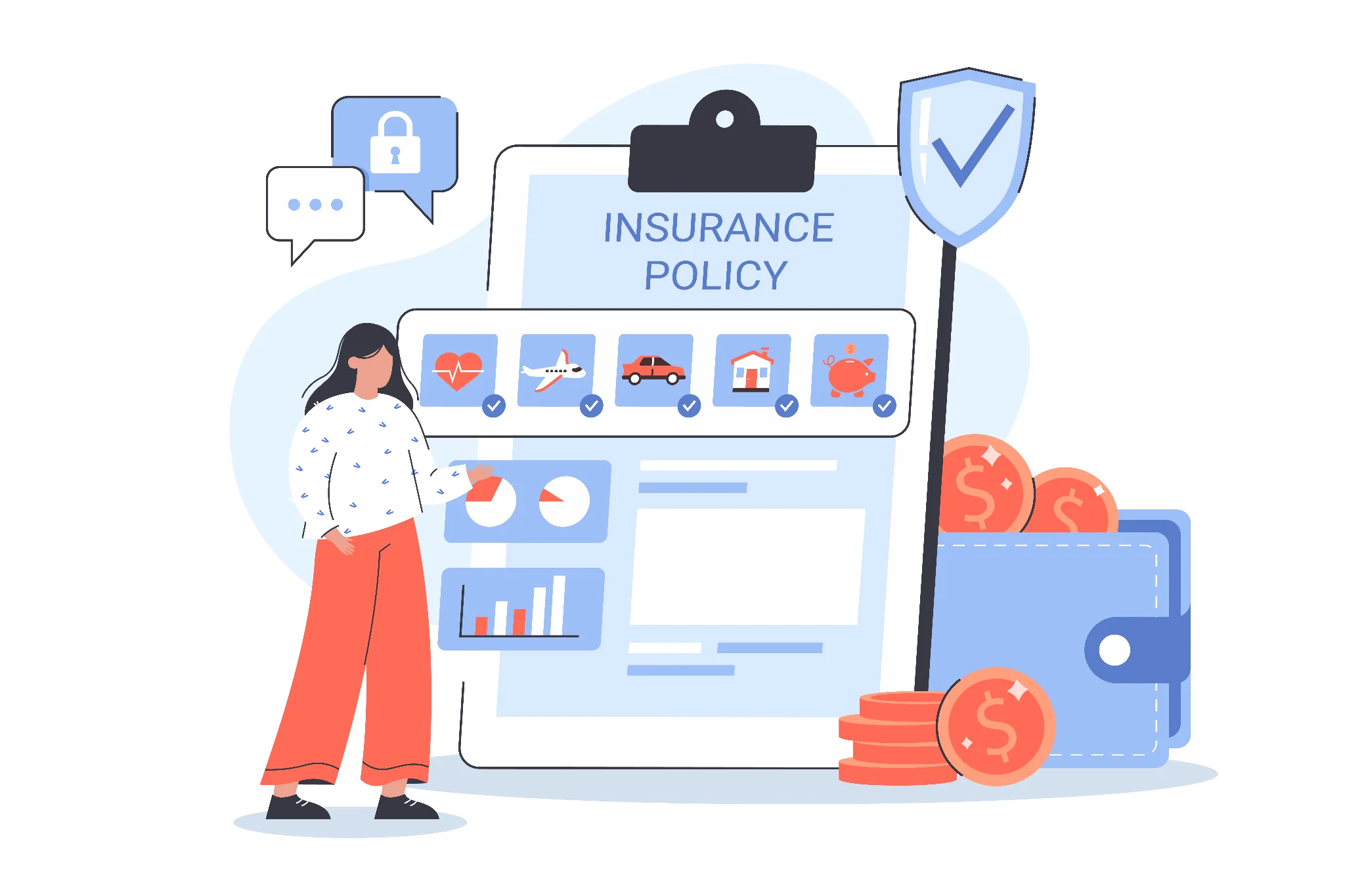
Insurance Content That Builds Trust: A Guide for Marketers
No one buys insurance enthusiastically. They buy it cautiously, usually after a conversation that made them uncomfortable, or after someone they knew had to file a claim and found the fine print waiting for them.
This is the fundamental tension in insurance content writing: you are selling a product that customers hope they never need, in a category built on fear, complexity, and distrust. Standard marketing playbooks, benefit-forward, aspiration-led, call-to-action heavy, rarely work here.
Insurance content that builds trust requires a different philosophy. It must educate before it persuades. It must acknowledge complexity rather than hide it. And it must meet customers in the emotional register of protection, not aspiration.
Why Insurance Content Fails: The Four Failure Modes
1. Oversimplification That Backfires
Insurers often try to simplify complex products to make them accessible, a reasonable instinct. But oversimplification in a regulated category creates two problems: regulatory risk (claims that violate disclosure requirements) and customer backlash when reality differs from the simplified promise.
"Complete protection for your family" is a marketing line that a compliance officer should stop. "Sum assured up to Rs 1 crore with premium waiver on critical illness" is specific, accurate, and trustworthy.
2. Jargon That Isolates
IRDA, ULIP, premium waiver rider, surrender value, free look period, insurance is rich with terminology that means nothing to most customers. Content that assumes familiarity with this vocabulary isolates the audience it is trying to reach.
The solution is not to avoid technical terms; it is to define them in context, once, and then use them consistently. A reader who understands what a "critical illness rider" is at paragraph two can engage with that term in paragraph eight.
3. Fear-Led Copy That Triggers Avoidance
Some insurance content leans heavily on fear: the consequences of not having cover, the family left without income, the medical bills that drain savings. Fear has a role in insurance marketing, but when it is the primary emotional register, it triggers avoidance rather than action.
Fear opens a conversation. Reassurance closes it. Content that moves from risk acknowledgment to solution clarity performs better than content that dwells in consequence.
4. Compliance Copy Buried in Fine Print
Regulatory disclosures, exclusions, and conditions are often buried in footnotes or appended in 8-point type. This is a compliance strategy, not a trust strategy. When customers discover exclusions at claim time, the brand damage is far worse than if they had been told upfront.
Insurance content that proactively addresses what is NOT covered, clearly, in the main body, builds far more trust than content that hopes customers never find the fine print.
The Trust Framework for Insurance Content
Building trust in insurance content requires operating across three dimensions simultaneously, an approach aligned with Google's E-E-A-T guidelines, which classify insurance as a YMYL category requiring demonstrated real-world expertise and editorial accountability:
Dimension 1: Accuracy Without Intimidation
Accurate insurance content does not have to read like a policy document. The key is accurate simplification, saying something true and simple rather than false and simple. This requires insurance domain knowledge that most generalist content agencies lack.
At LexiConn, our founder's seven years as a wealth manager at HSBC Bank give our BFSI content team a baseline understanding of financial products that is difficult to replicate through research alone. When we write about surrender values or critical illness riders, we are drawing on lived advisory experience, not Wikipedia.
Dimension 2: Empathy Without Manipulation
Effective insurance content acknowledges the customer's real emotional context, the concern for family, the uncertainty about the future, the confusion about what they actually need. It does this without exploiting that emotional state to drive a rushed purchase decision.
The marker of empathetic insurance content is specificity: it speaks to the situation of the actual reader (a 35-year-old with two children and a home loan) rather than an abstract demographic.
Dimension 3: Transparency About Complexity
The instinct to hide complexity in insurance content is understandable, and consistently wrong. Customers who understand a product's limitations are far more likely to trust the brand than customers who feel they were misled.
Content that addresses comparisons honestly ("A term plan gives you pure protection at lower premiums; a ULIP gives you insurance plus market-linked returns, at higher cost and more complexity") creates the kind of informed consent that reduces claim disputes and builds long-term loyalty.
Content Formats That Work in Insurance Marketing
Explainer Articles Over Promotional Blogs
"What is a critical illness rider and do you need one?" outperforms "Why you need to buy our critical illness rider today" at every stage of the funnel. Explainer content drives organic search traffic, earns backlinks, and positions the brand as an authority rather than a vendor.
BFSI brands that invest in authoritative explainer content, answering the real questions customers type into search engines, build domain authority that drives leads for years.
Comparison Content
Insurance customers are comparison shoppers by necessity; the products are complex, and the stakes are high.
Content that helps them compare fairly (term vs. whole life, ULIP vs. mutual fund + term, group vs. individual health cover) builds trust by acknowledging that the brand's product may not always be the right one.
This transparency is counterintuitive for marketing teams. It is highly effective for customer acquisition and retention.
Claim Stories (The Most Underused Format)
A claim story is not a testimonial, it is a narrative that walks through the reality of how a claim works: the documentation needed, the timeline, the process. These stories demystify the claim experience, which is the number one anxiety point for insurance buyers.
Brands that publish detailed, honest claim stories consistently outperform those that rely on product-feature content alone for trust building.
Glossary and FAQ Content
Insurance is one of the few categories where a glossary page can be a genuine marketing asset. When customers search "what is sum assured" or "what is premium waiver on death", they are in a buying research mode.
A brand that answers those questions authoritatively captures that intent and builds the kind of familiarity that converts.
For insurance brands running AEO (Ask Engine Optimisation) strategies, FAQ and glossary content is essential infrastructure. As AI search engines increasingly answer insurance questions in the zero-click format, brands that have structured, authoritative definitional content are cited more frequently.
LexiConn's content audit services regularly surface missing glossary and FAQ content as a gap in insurance brands' organic strategies, a structural opportunity for brands willing to invest in genuine educational content.
The Compliance Layer: Non-Negotiable in Insurance Content
Insurance content in India operates under the IRDAI (Insurance Advertisements and Disclosure) Regulations, 2021. These govern benefit claims, comparative advertising, risk disclosures, and mandatory disclaimers. Non-compliance carries regulatory penalties, but more importantly, it erodes the trust that insurance content is trying to build.
Content teams working on insurance campaigns need a compliance review process built into their workflow, not bolted on at the end. At LexiConn, we use Brand Guard AI to validate insurance content drafts against IRDAI guidelines before they reach the client's internal compliance team. This compresses the pre-submission review cycle from days to hours.
For BFSI marketing leaders managing multi-channel insurance campaigns, where the same content appears in digital, email, branch, and social formats, a tool that validates compliance across all formats simultaneously is not a convenience. It is a risk management essential.
See our overview of banking content compliance workflows for a practical framework that applies equally to insurance content operations.
Actionable Recommendations for Insurance Marketers
- Build an explainer content library first. Prioritise answering the 50 most common insurance questions your customers actually ask, before investing in campaign content.
- Separate education-stage content from conversion-stage content. Use explainers, comparisons, and claim stories for top-of-funnel. Reserve product-specific calls to action for users who have already demonstrated intent.
- Integrate compliance review into your content calendar -- not as a last-minute check but as a scheduled workflow step with defined SLAs.
- Publish honest comparison content. It feels counterintuitive. It builds trust at scale.
- Invest in claim story content. Interview customers who have had positive claim experiences and build detailed narratives. This single content format reduces the number one buyer anxiety in insurance.
The Future of Insurance Content
As AI search engines increasingly answer insurance questions directly ("Which term plan is best for a 40-year-old non-smoker?"), the brands with authoritative, structured, machine-readable content will be cited in those answers. Brands without it will not exist in zero-click search.
The shift from SEO-for-blue-links to AEO-for-AI-citations is already underway in insurance search. Insurance brands that invest in clear, factual, well-structured educational content now are building infrastructure for a search environment where being cited by an AI is more valuable than ranking on page one.
Trust in insurance is not built in a campaign. It is built in content, one accurate, empathetic, transparent article at a time. The Edelman Trust Barometer consistently finds that in financial services and insurance, informational clarity and perceived expertise outrank price as drivers of brand trust, making content quality a strategic retention lever, not just a marketing output.
Fix Your Insurance Content Writing, Build Trust Where It Matters Most
Improving insurance content does not require more pages. It requires domain accuracy, regulatory alignment, and empathy-driven messaging, exactly where LexiConn works with marketing teams as a consulting-led content partner rather than just a writing vendor.
Key Takeaways
- Insurance content must educate before it persuades
- Common failures: oversimplification, jargon, fear tactics, hidden compliance
- Trust is built through accuracy, empathy, and transparency
- Claim stories are high-trust, underused content formats
- AEO-ready, structured content is now a strategic priority
FAQs
How do IRDAI advertising guidelines affect insurance content strategy?
IRDAI guidelines restrict specific benefit claims, require mandatory risk disclosures, and govern comparative advertising. Content teams must embed compliance review into their production workflow, not treat it as a final check. A structured review process with defined SLAs prevents last-minute rewrites and regulatory exposure.
Is fear-based messaging effective in insurance content?
Fear is effective at opening a conversation about insurance needs, but ineffective as the dominant emotional register. Content that moves from risk acknowledgment to reassurance and solution clarity consistently outperforms content that dwells in consequences. Fear opens the door; empathy and transparency close the sale.
How should insurance brands approach comparison content with competitors?
Honest comparison content, acknowledging where a competitor's product may better suit a specific customer, builds far more trust than a one-sided comparison. Customers who discover they were misled in comparison content damage brands severely. Transparent comparison consistently outperforms promotional comparison in long-term customer acquisition.
What content formats work best at the top of the insurance marketing funnel?
Explainer articles, glossary content, product comparison guides, and claim process walkthroughs perform best at top-of-funnel. These formats answer the questions customers are already searching for, build organic search authority, and establish brand credibility before customers are ready to buy.
How should insurance content handle policy exclusions and limitations?
Exclusions should be addressed proactively in the main body of product content, not buried in footnotes. Customers who understand limitations before purchase are less likely to dispute claims and more likely to maintain long-term brand loyalty. Proactive exclusion disclosure is a trust investment, not a liability.
Need expert content support? LexiConn has been India's B2B content partner since 2009, building content systems for leading enterprise brands across BFSI, technology, and media. Explore our financial services content →